2026 Home Decor Trends: Colors, Textures, and Materials to Watch
Why 2026 Is the Year of Modern Luxury
If there’s one theme tying together everything happening in interior design right now, it’s this: home decor trends for 2026 are trading cold minimalism for something warmer, richer, and far more personal.
These aren’t fleeting fads you’ll regret in a year. They’re grounded, livable shifts that work whether you’re refreshing a single room or planning a full renovation.
2026 is emerging as the year of modern luxury — a look defined by sculptural furniture silhouettes, natural stone surfaces like quartzite and dark travertine, calming indoor zen gardens, and bold abstract rugs that behave more like art than flooring.
If you’ve been chasing interiors that feel organic and elevated at the same time, this year’s design language was practically built for you.
Why the 2026 Trends Are Redefining Home Spaces
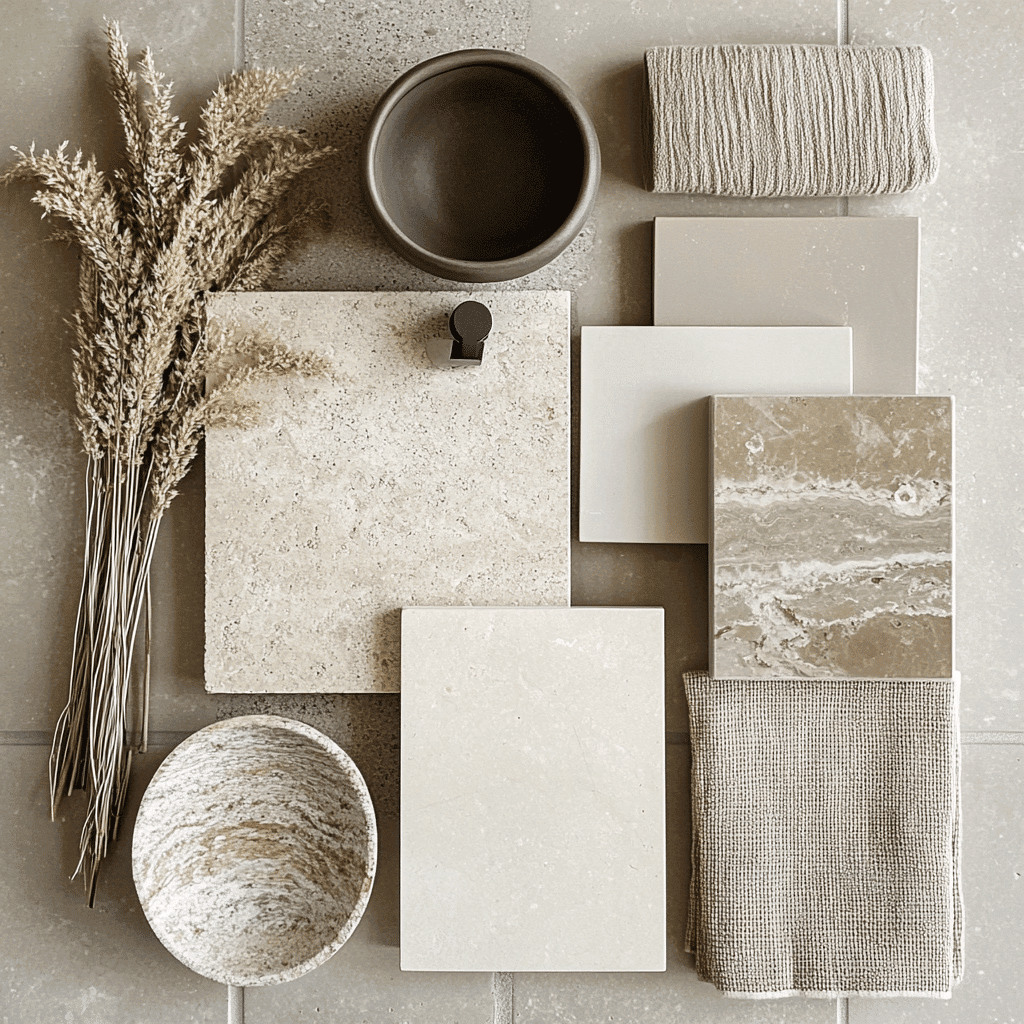
So what makes 2026 different from the design cycles before it?
Picture the design world exhaling after a decade of sleek, impersonal spaces and finally choosing something more soulful. There’s a visible pushback against mass-produced, fast-furniture aesthetics in favor of interiors that carry a story and support genuine well-being.
The home is being reframed as a personal sanctuary — warm, intuitive, and quietly intelligent. Sustainability sits at the center of that shift, with eco-conscious materials taking the spotlight and smart-home technology fading into the background instead of dominating it.
These aren’t just aesthetic choices; they’re functional ones, designed to help a space actually restore you after a long day.
If your living room has been feeling flat lately, 2026 brings the antidote: layered color, tactile texture, and thoughtful innovation.
What’s Driving the 2026 Home Decor Trends?
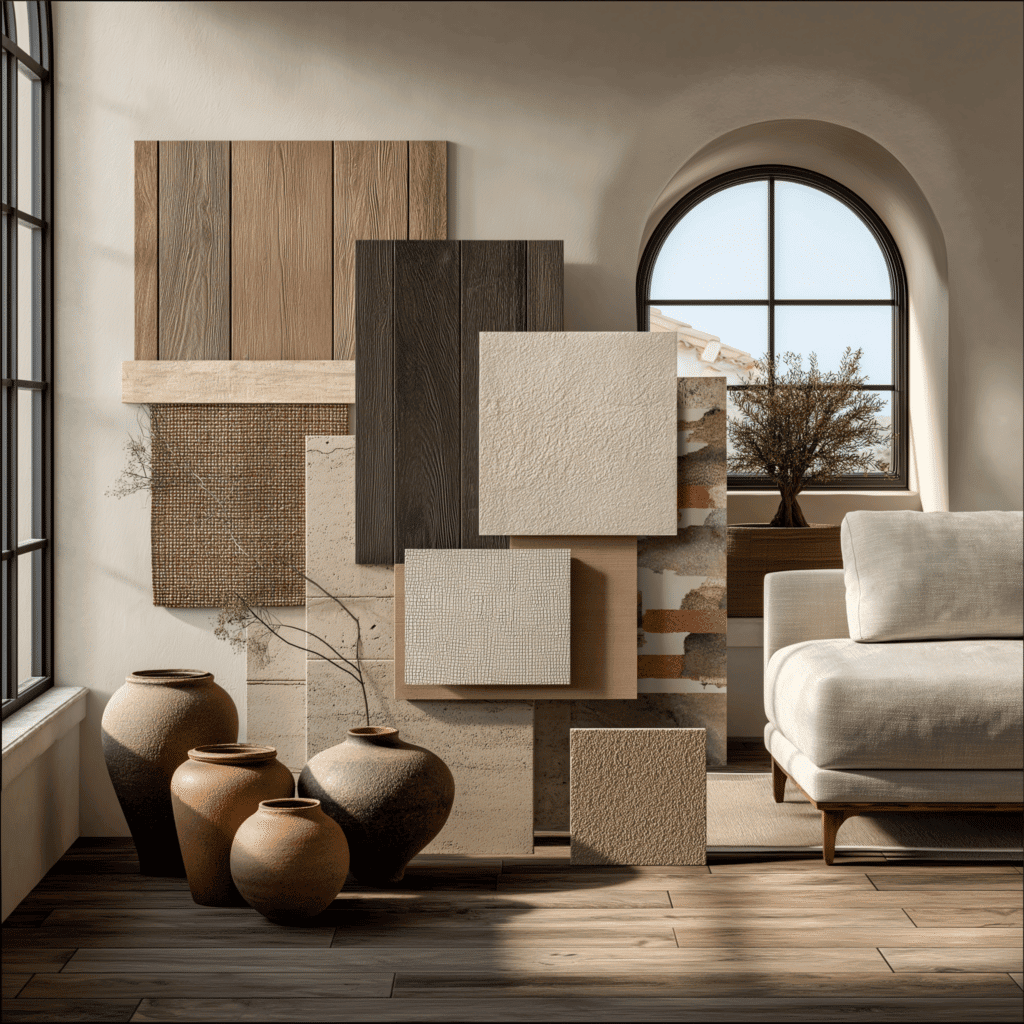
The Influence of Global Design Movements
Interior design has stopped being defined by geography. Travel and constant digital exposure to design from around the world mean influences now blend more freely than ever — Japanese zen minimalism sitting comfortably beside Italian stone craftsmanship. 2026 is, in many ways, a celebration of that cultural cross-pollination.
Wider Access to High-End Materials
Premium materials such as quartzite and travertine are no longer reserved for high-budget projects. Broader availability and a wider range of price points mean upscale design is genuinely achievable for far more homeowners than before.
A Push Toward Wellness-Oriented Spaces
Well-being now sits at the heart of interior design. Homes are being treated less like showpieces and more like sanctuaries — spaces built around calming textures, indoor greenery, and layouts intentionally designed to help you unwind.
Trend #1: Modern Luxury
What Modern Luxury Actually Means
Forget flashy, over-decorated glam. Modern luxury in 2026 is about understated elegance: clean architectural lines, tactile finishes, and a handful of curated statement pieces rather than a room full of noise.
It’s the difference between a home that shows off and a home that simply feels like a five-star retreat, without any of the fuss.
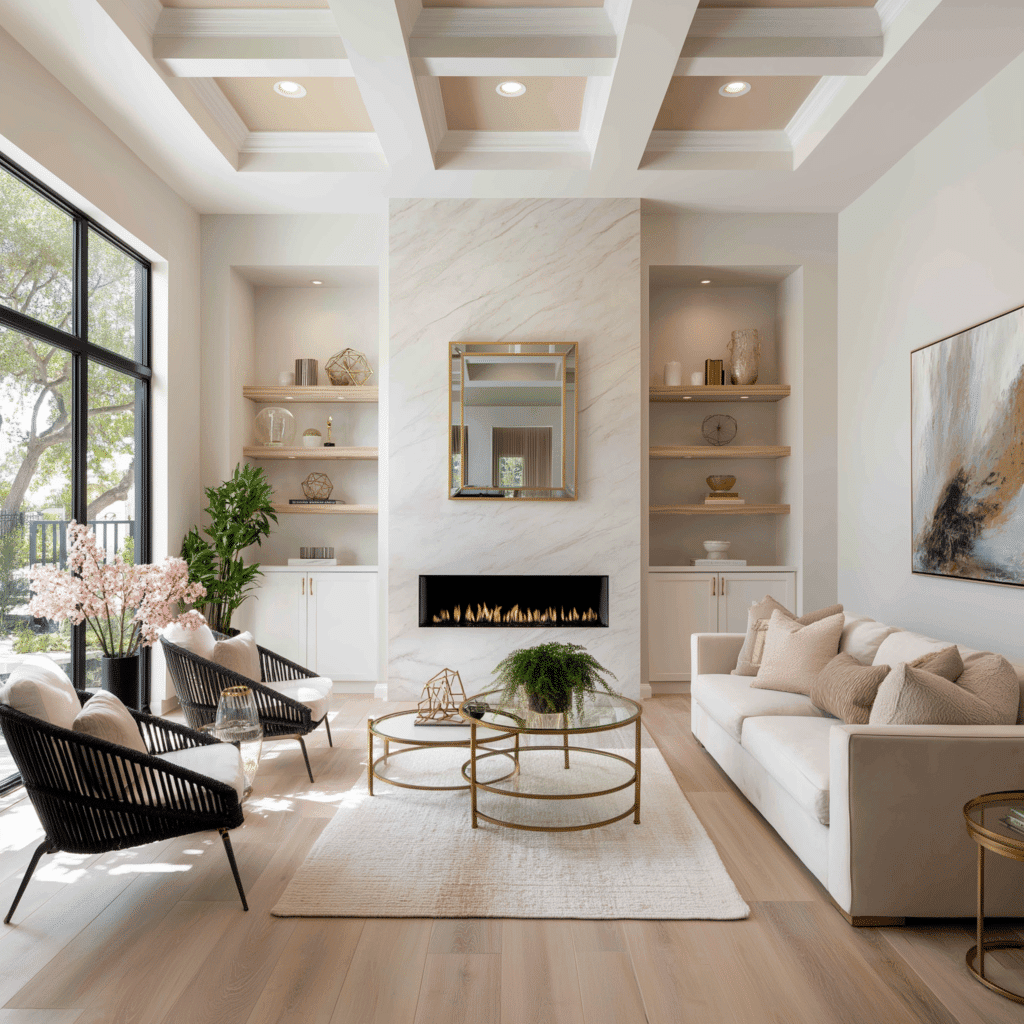
How to Bring Modern Luxury Into Your Home
Start small — upgrade a lighting fixture, add a sculptural side table, or layer in tactile fabrics like velvet and bouclé. Modern luxury lives in the details that whisper rather than shout.
Living Room: Sculptural Comfort
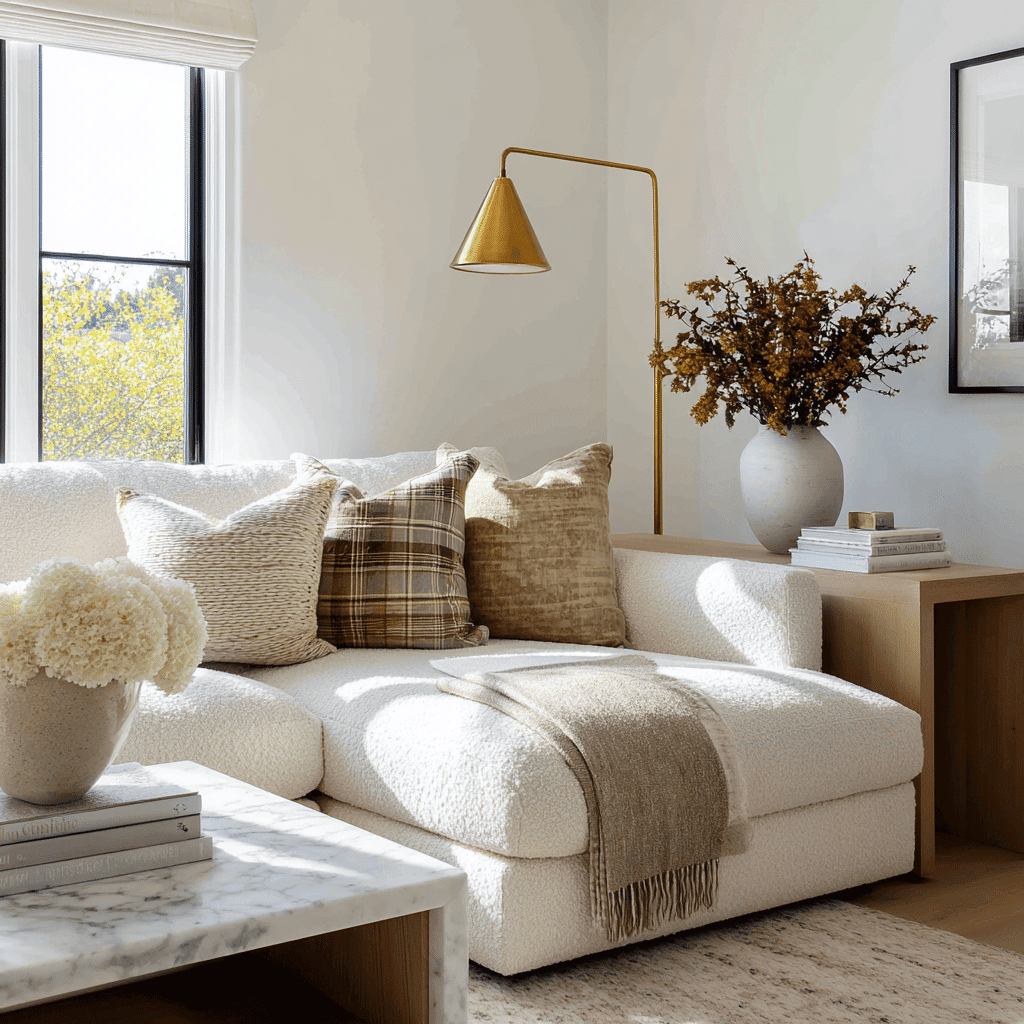
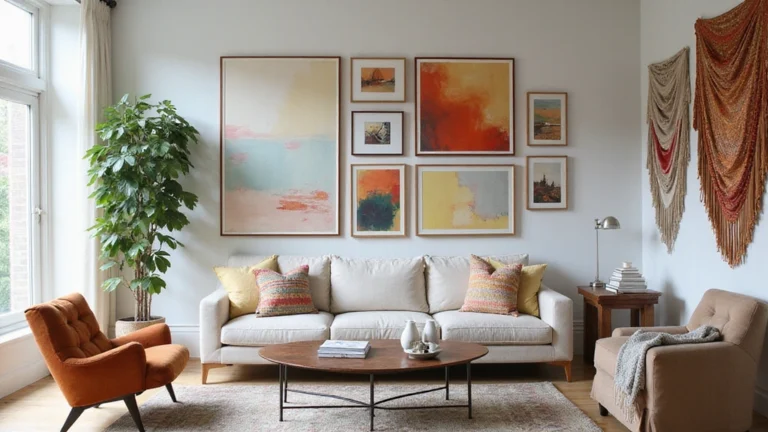
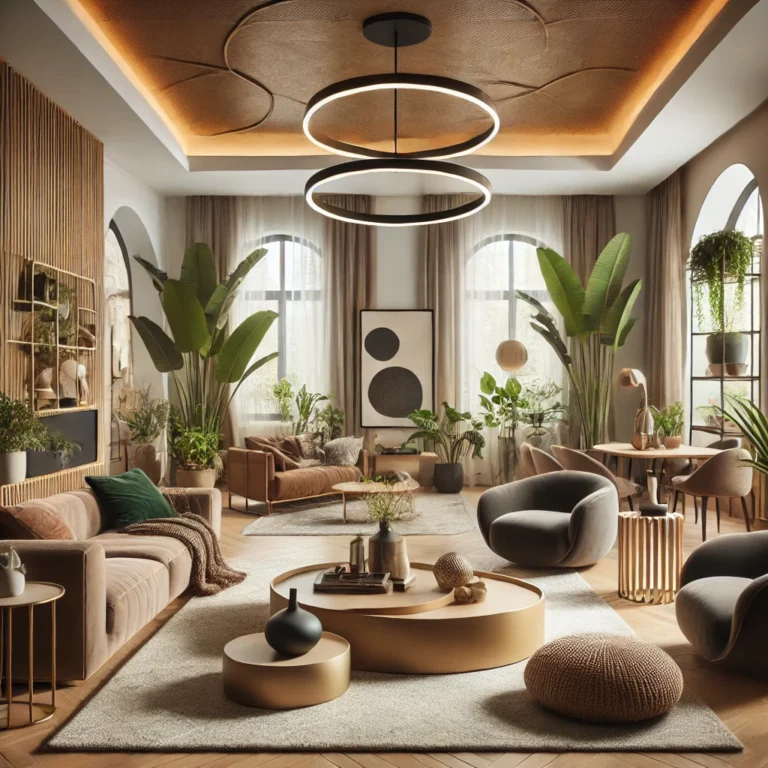
In the living room, modern luxury comes through in high-impact but understated choices. Swap ornate decor for a statement sofa in bouclé or velvet, paired with sleek sculptural side tables. Layer in textured rugs and a mix of soft lighting — think a contemporary chandelier alongside discreet wall sconces.
- Example: A cream bouclé sectional with a marble-topped side table, silk throw pillows, and a brass floor lamp for a warm, unobtrusive glow.
- Example: A low-profile espresso leather sofa with a smoked-glass coffee table on a textured wool rug, grounded by a minimalist black metal floor lamp and a single oversized abstract artwork.
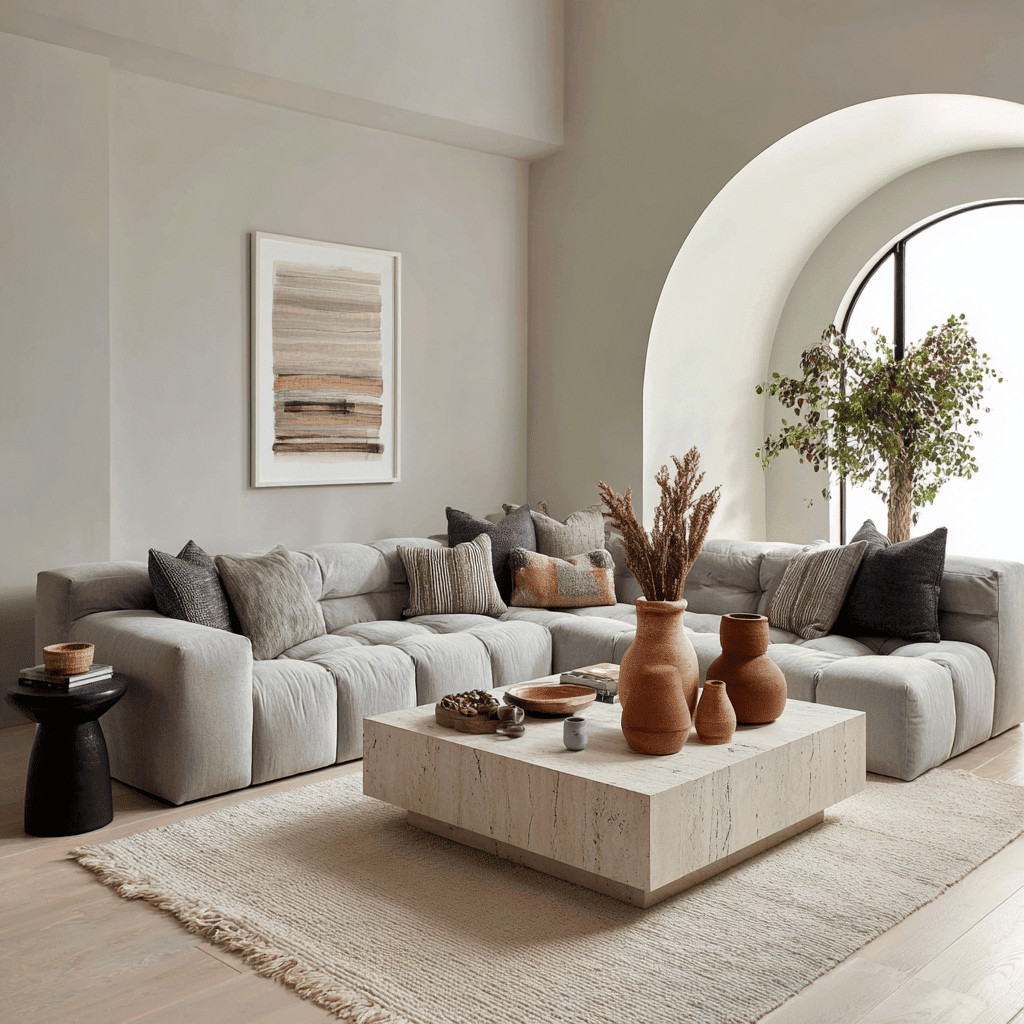
- Example: A soft gray linen modular sectional styled with a geometric stone coffee table, ceramic vases in earthy tones, a handwoven jute rug, and sculptural oak armchairs.
Kitchen: Refined Functionality
Modern luxury kitchens strike a balance between performance and polish. Waterfall islands in quartzite or porcelain, handleless cabinetry, matte brass or black fixtures, and concealed storage keep the look streamlined without sacrificing usability.
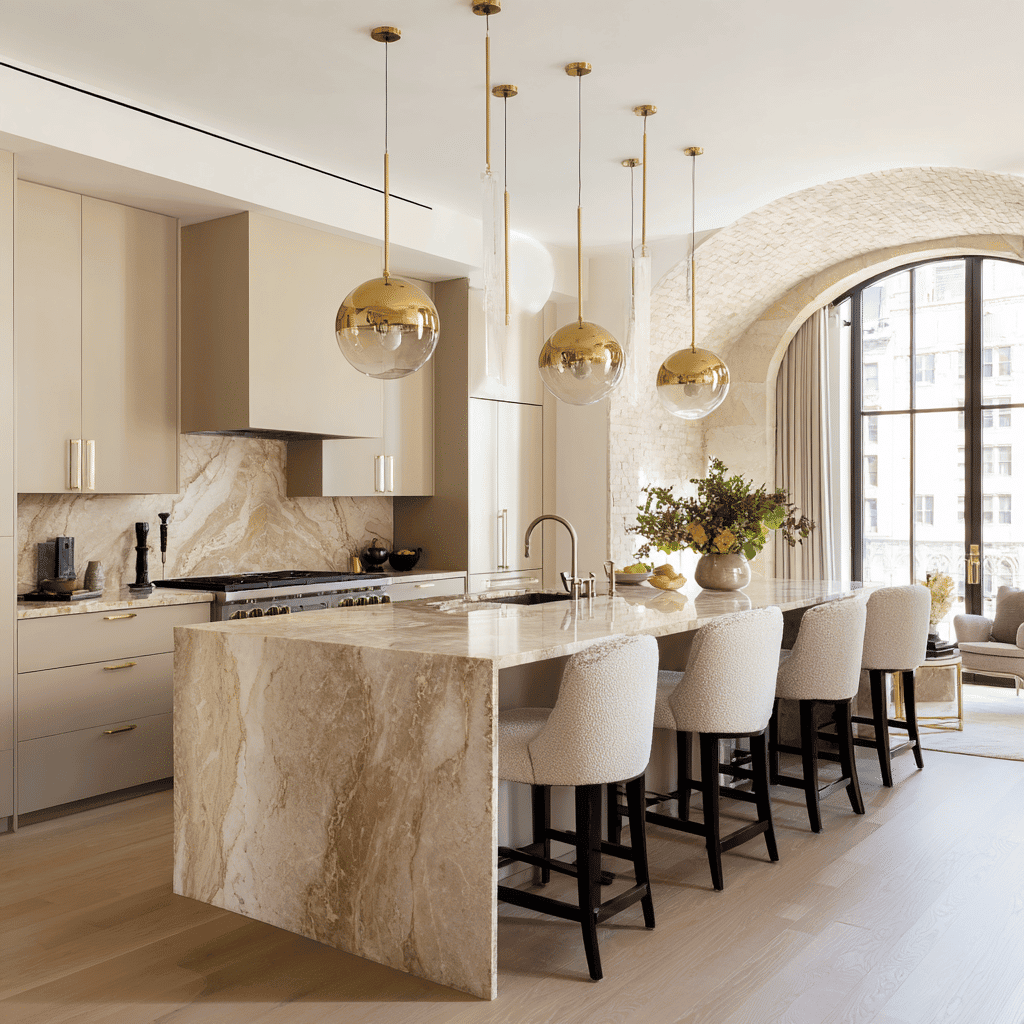
- Example: A white kitchen with a Taj Mahal quartzite waterfall island, brass pendant lighting, and upholstered barstools.
- Example: A coastal-leaning kitchen pairing a Taj Mahal quartzite island with rattan counter stools, white oak cabinetry, and airy linen drapery.
- Example: An urban kitchen combining Taj Mahal quartzite counters and backsplash with matte black lower cabinets, glossy white uppers, and slim brass hardware.
Bedroom: Restful Elegance
Your bedroom should feel like a private suite in a boutique hotel — plush fabrics, calming neutral tones, and dimmable accent lighting throughout.
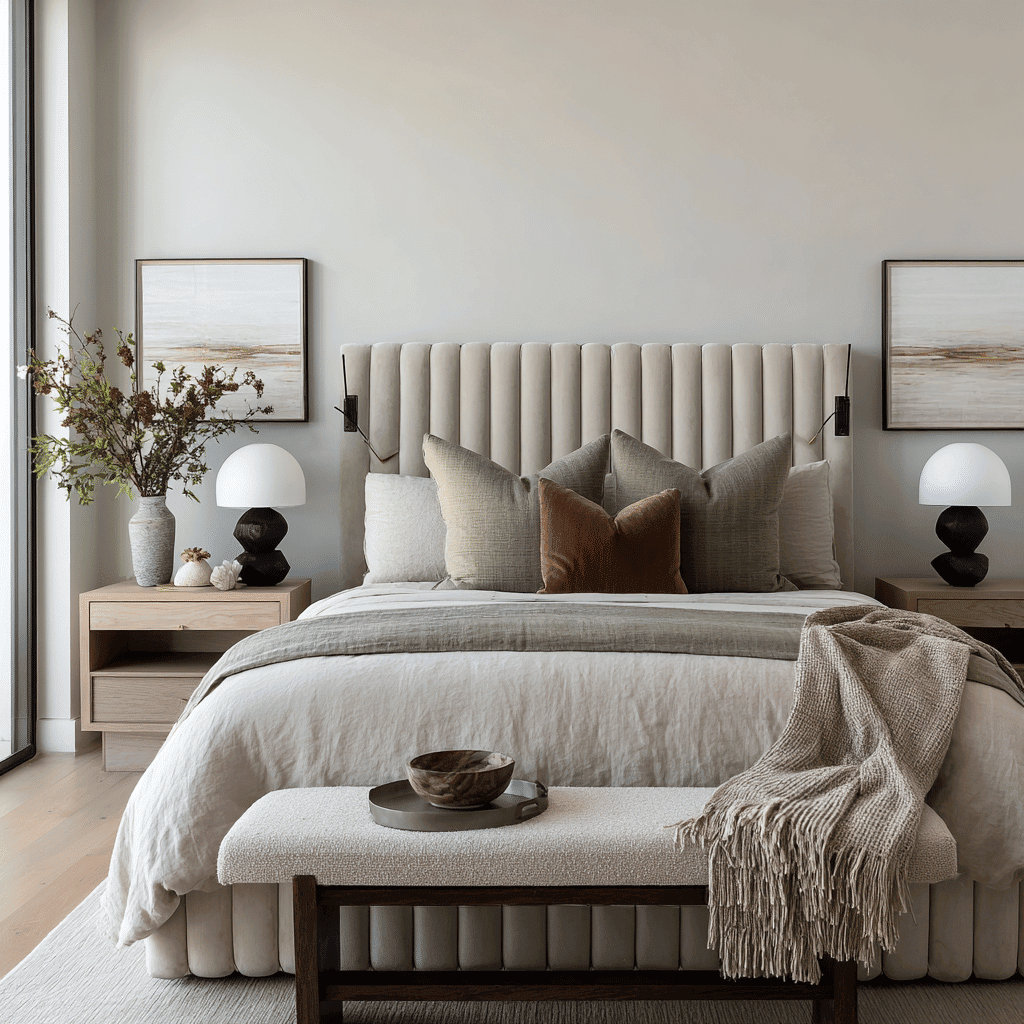
- Example: A king bed with a channel-tufted velvet headboard, neutral layered linen sheets, a cashmere throw, and sculptural table lamps.
- Example: A minimalist oak platform bed with crisp percale sheets, a textured alpaca blanket, sheer floor-to-ceiling curtains, and slim alabaster lamps on stone pedestal side tables.
- Example: A dramatic espresso leather-paneled headboard with moody charcoal bedding, silk accent pillows, a brushed-brass chandelier, and a plush Moroccan rug.
Bathroom: Spa-Like Escape
Large-format stone tile, frameless glass showers, and floating vanities with vessel sinks turn the bathroom into a genuine spa retreat. Oversized mirrors and statement sconces finish the calm, indulgent mood.
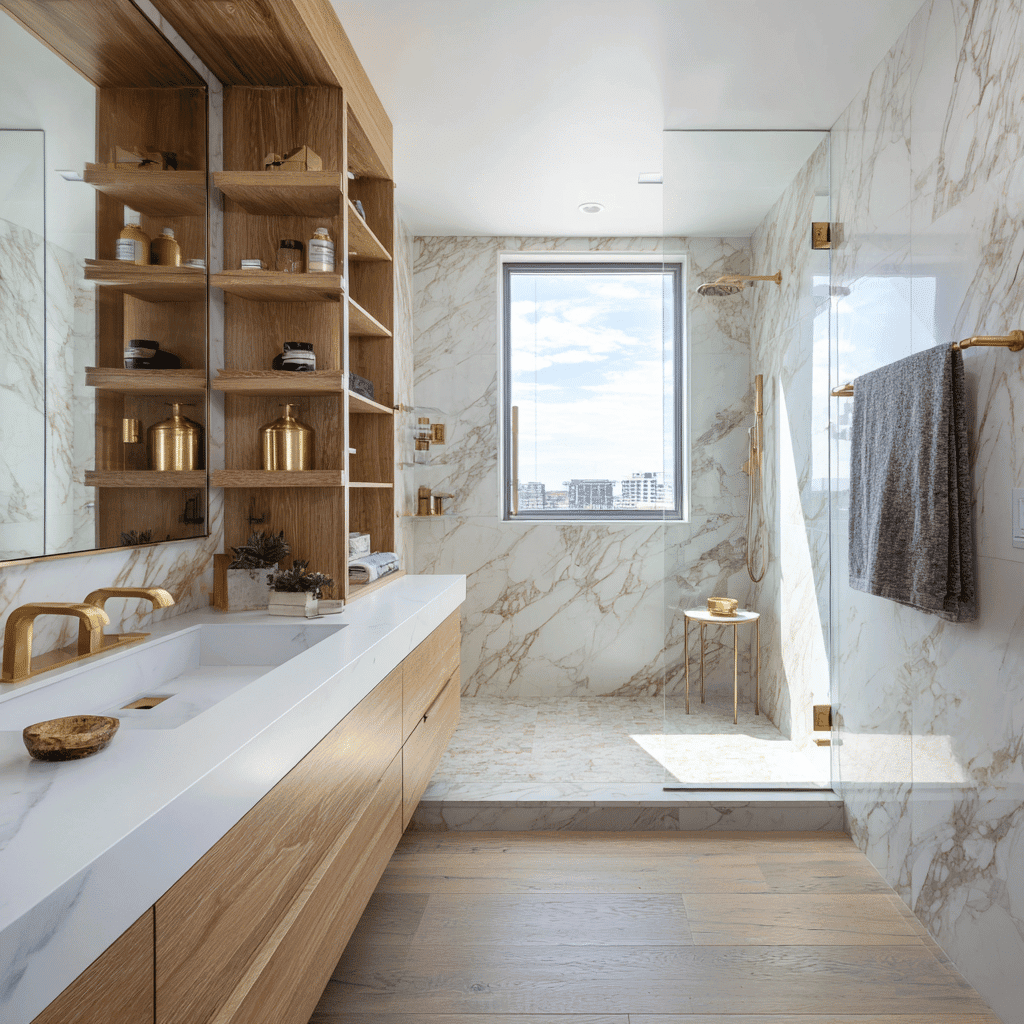
- Example: A marble-look porcelain shower with a floating oak vanity, white quartz counter, brushed gold fixtures, and a woven basket of rolled towels.
- Example: A moody bathroom in large-format slate tile with a frameless shower, freestanding soaking tub, matte walnut vanity, dual stone vessel sinks, and slim black sconces.
- Example: A bright, organic bathroom with creamy travertine floors, a bleached-oak floating vanity, a backlit circular mirror, brushed nickel fixtures, and linen Roman shades.
Trend #2: Taj Mahal Quartzite
Why This Stone Is Taking Over 2026
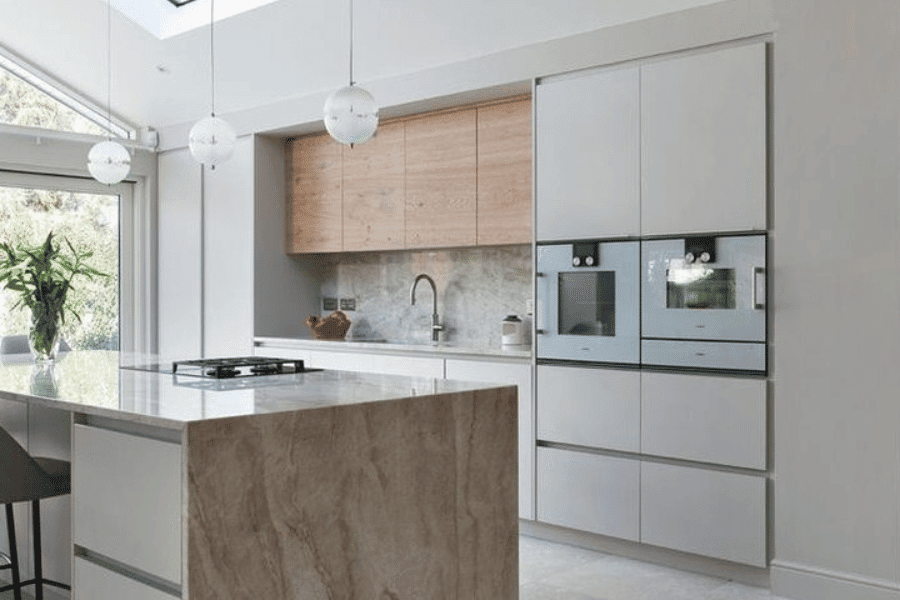
Taj Mahal quartzite has quickly become one of the defining materials of 2026 interiors. Its creamy beige base tone and delicate veining give it a look that rivals marble, but with far greater durability — quartzite resists chipping and etching in ways marble simply can’t.
Designers gravitate toward it because it adapts to almost any setting, from a sleek city loft to a warm transitional home.
Best Ways to Style Taj Mahal Quartzite
This stone excels as a kitchen countertop, statement island, or full-height dramatic backsplash. In bathrooms, it elevates vanities and shower walls into something that feels closer to a spa suite than a functional space — soft creamy tones, subtle veining, frameless glass, and brushed brass fixtures working together for quiet sophistication.
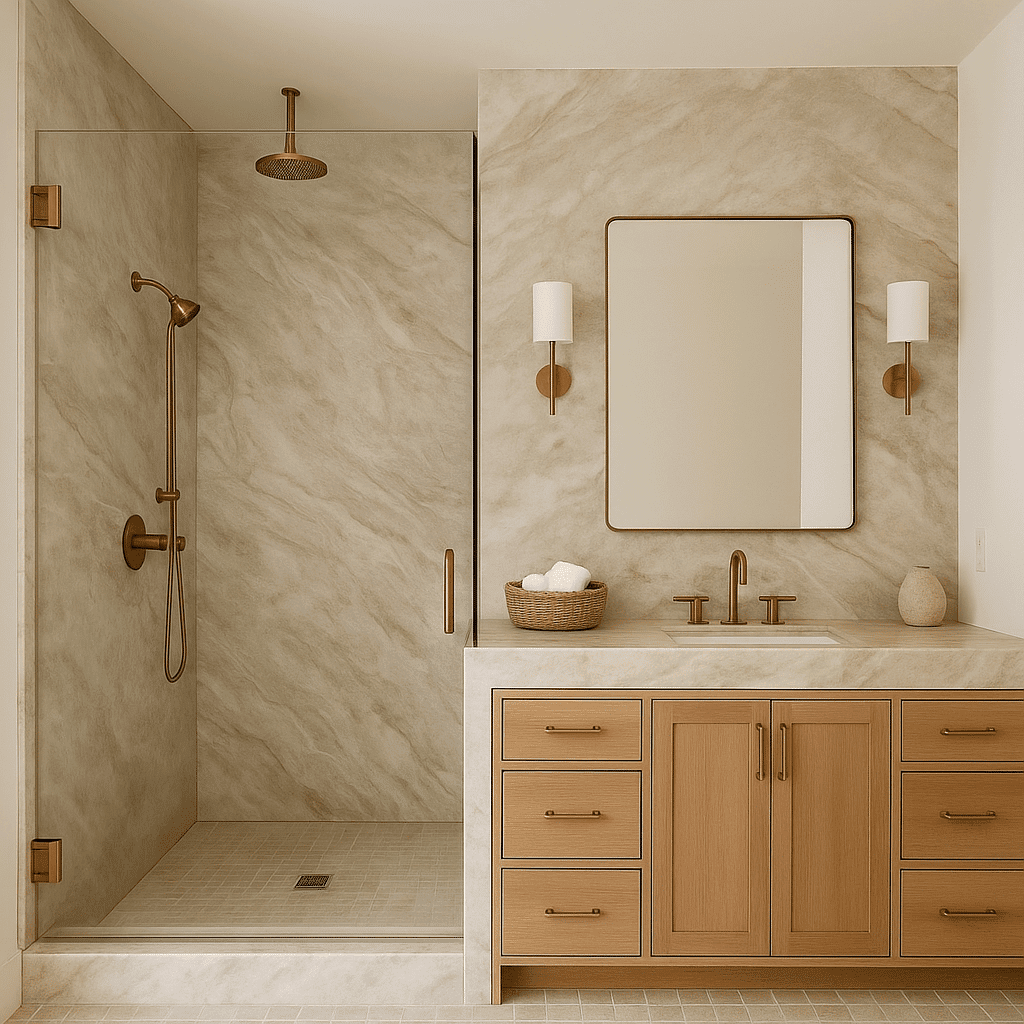
Pair it with matte black hardware for contrast, or brushed brass for warmth. Its understated elegance means it holds its own next to modern cabinetry, natural wood, or bolder accent choices.
- Coastal Serenity: White shaker cabinets, a Taj Mahal quartzite island, rattan pendant lighting, woven barstools, and brushed nickel hardware.
- Urban Contrast: Matte black lower cabinets, glossy white uppers, a matching Taj Mahal quartzite counter and backsplash, slim brass hardware, and glass globe pendants.
- Warm Transitional: Soft gray cabinetry, Taj Mahal quartzite countertops and full-height backsplash, antique brass lantern pendants, and taupe upholstered counter stools.
Trend #3: Indoor Zen Gardens
Creating Calm in Modern Homes
Wellness-driven design is arguably the biggest undercurrent of 2026, and indoor zen gardens sit right at its center. Whether it’s a rakeable sand garden, a small bonsai to tend daily, or a quiet pebble-lined corner, the goal is the same — a deliberate pocket of stillness inside a busy home.
Small vs. Large-Scale Zen Garden Ideas
Apartment dwellers can start with a tabletop zen kit or a single desk bonsai; the mindset shift these small rituals create is disproportionate to their size. Larger homes have room to dedicate an entire corner to bamboo, smooth river stones, or even a compact indoor water feature.
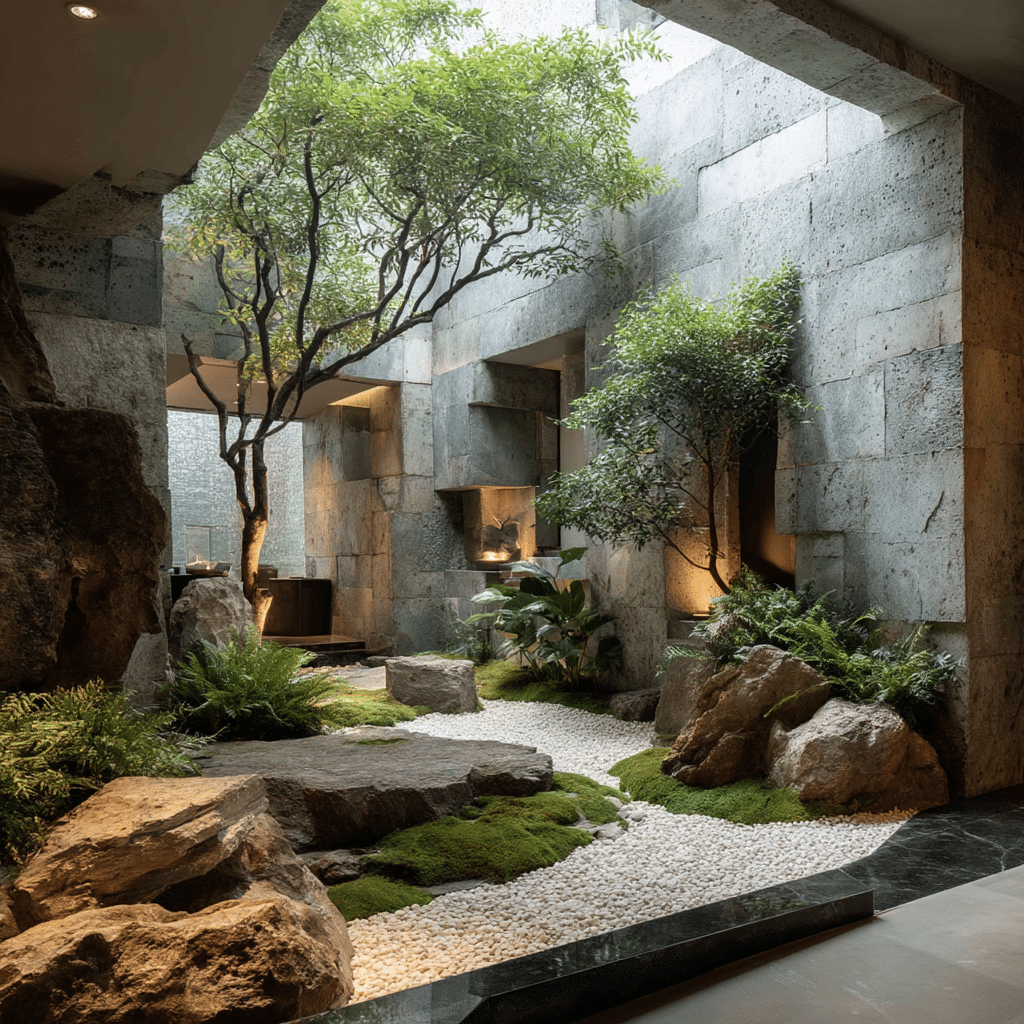
The appeal of a zen garden is its restraint — it doesn’t compete for attention, it quietly resets the energy of a room.
Trend #4: Travertine — Especially Dark Finishes
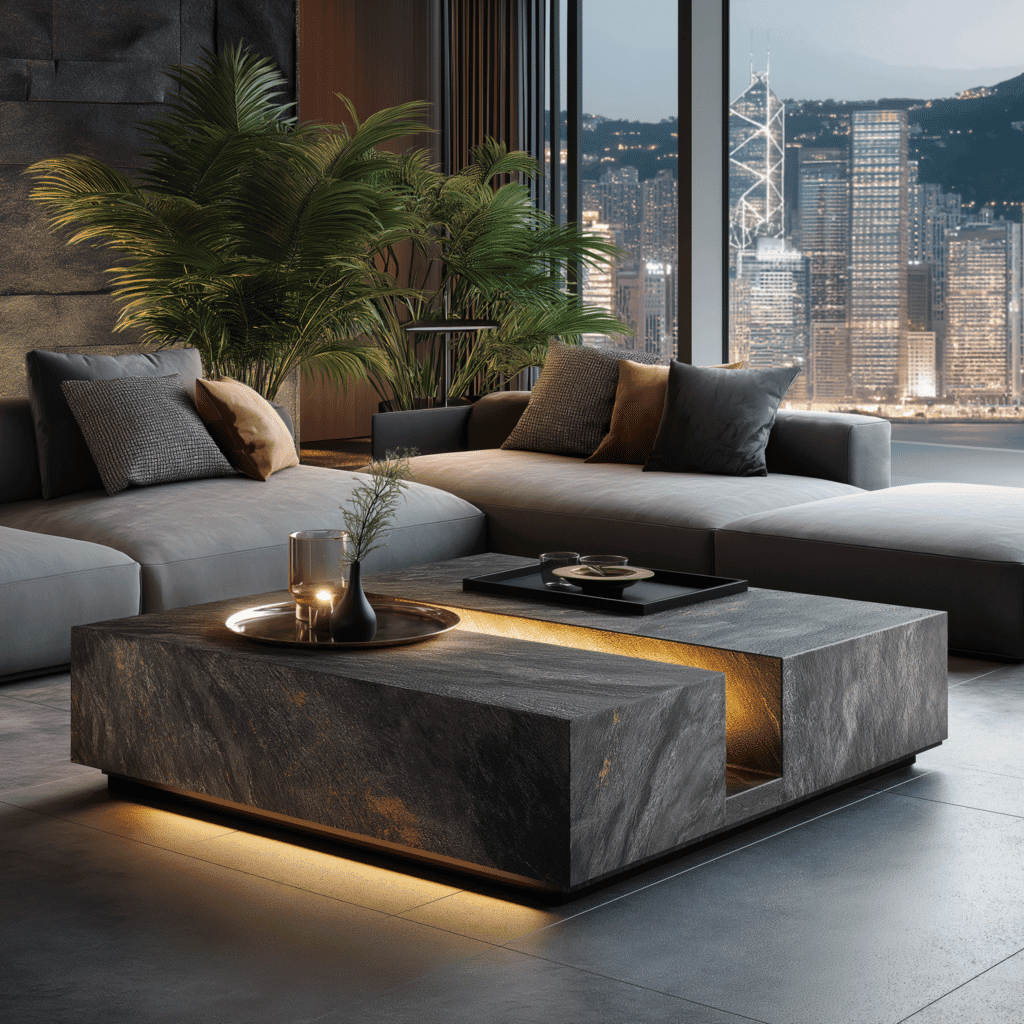
Why Dark Travertine Feels So Luxurious
Travertine has been a design staple for centuries, but 2026 gives it a bold new direction. Dark travertine, with its deep, earthy coloring, delivers richness without losing that grounded, natural character — luxury that doesn’t need to shout.
How Designers Are Using It in 2026
Expect dark travertine on statement dining tables, boutique-hotel-style bathroom vanities, and dramatic feature walls. Paired with warm neutrals, soft lighting, and light metallic accents, it reads as effortless, timeless sophistication.
Living Room: Statement Centerpiece
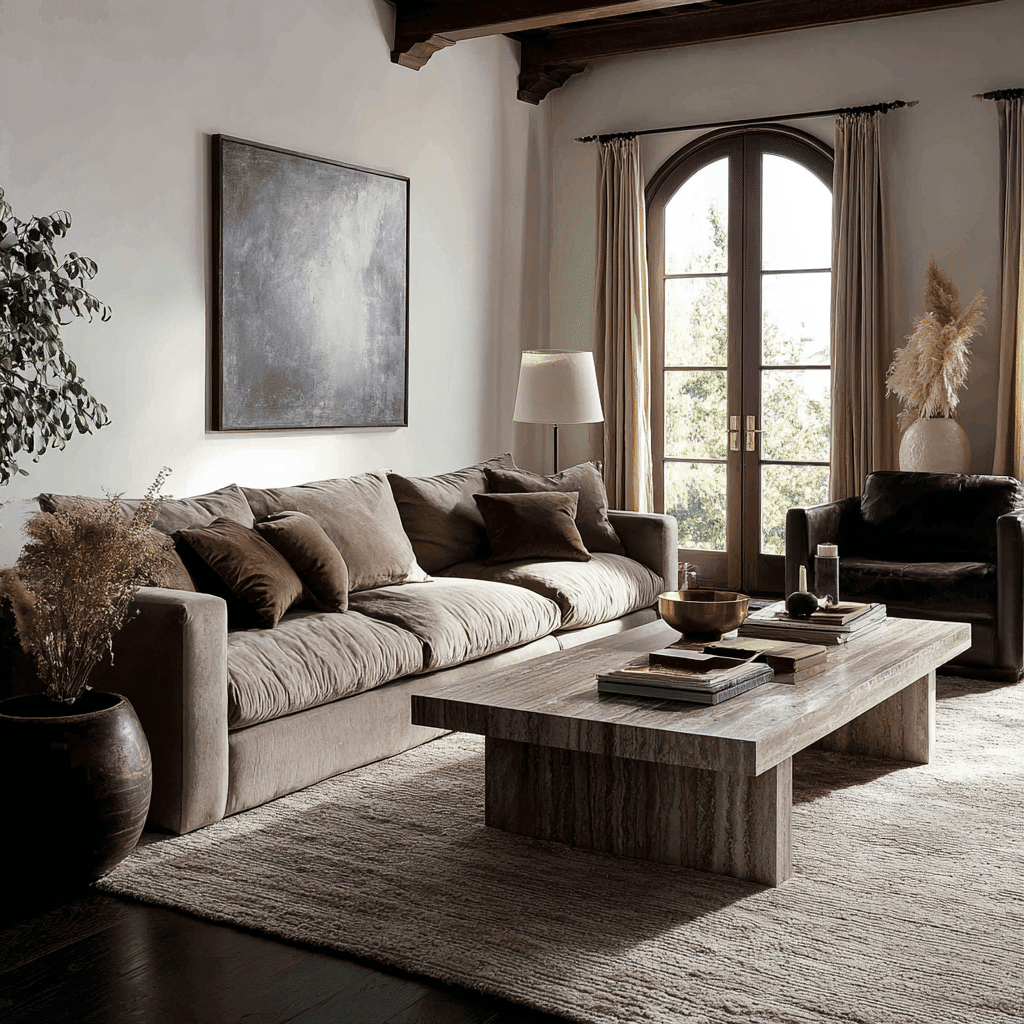
A low, oversized dark travertine coffee table instantly elevates a living room. Its natural veining keeps even the darker tones feeling alive rather than heavy. Pair with a plush taupe or cream linen sofa, textured wool rugs, and a few sculptural brass accents for balance.
Kitchen: Bold Island Design
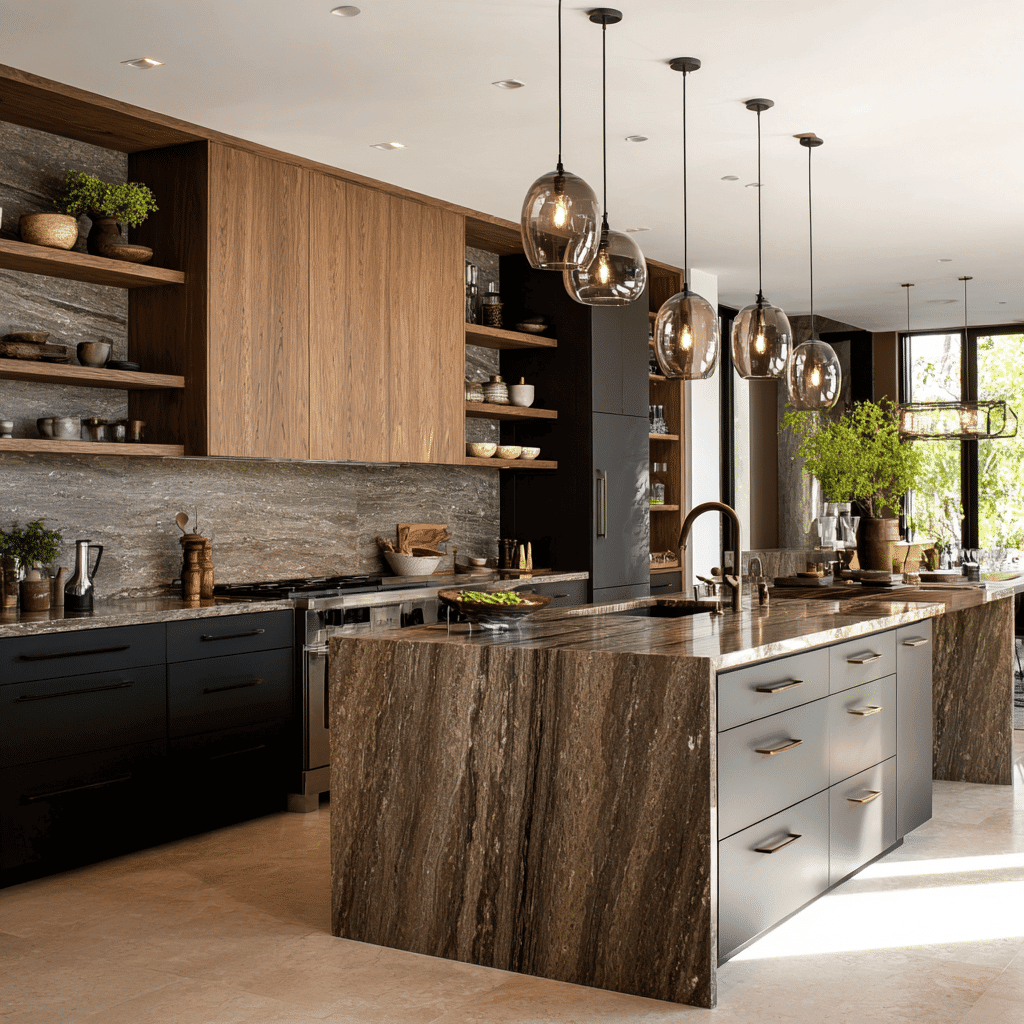
Dark travertine makes its strongest statement as a waterfall island, with deep brown and charcoal tones wrapping seamlessly from countertop to sides. Surround it with matte black lower cabinetry, warm oak uppers, and smoky glass or alabaster pendant lighting.
Bathroom: Boutique Spa Vibe
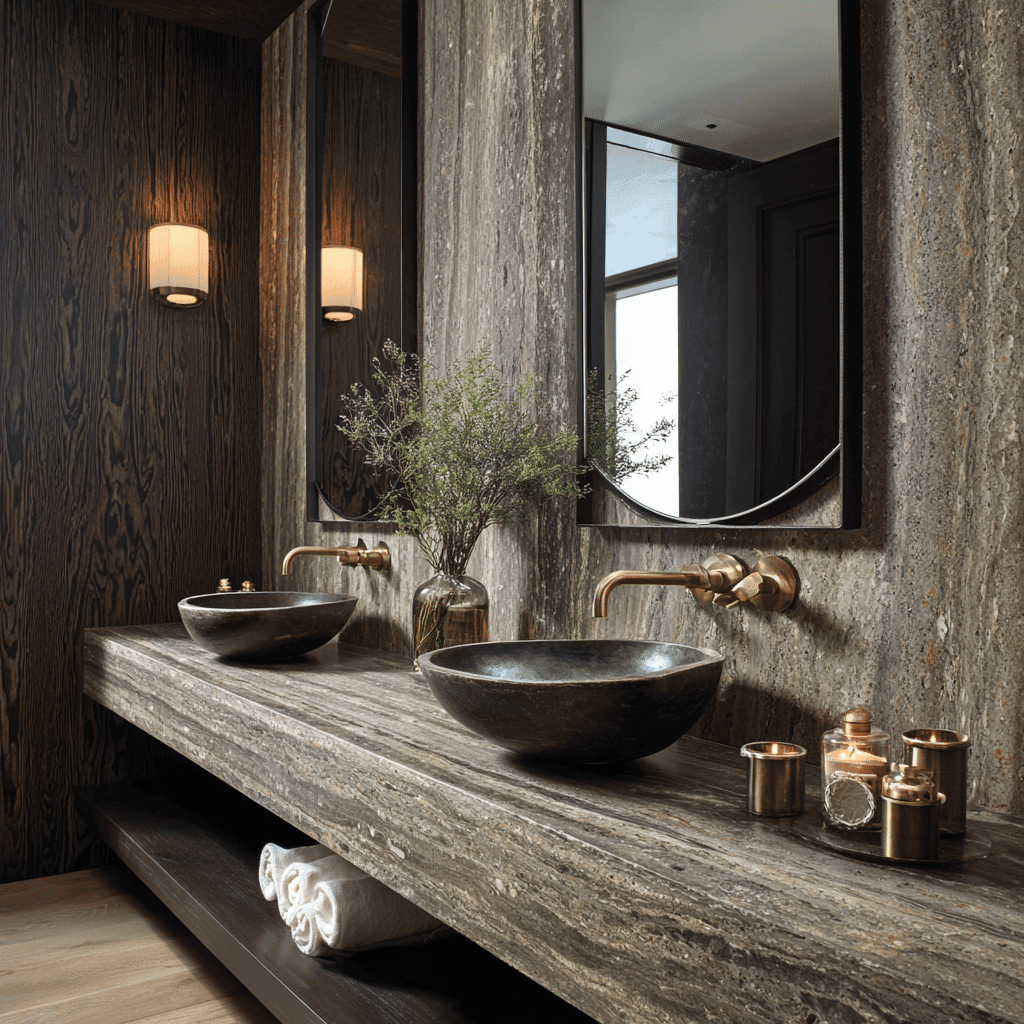
A dark travertine floating vanity with vessel sinks, paired with a matching feature wall, brushed brass fixtures, and an oversized round mirror, channels boutique-hotel luxury. Dimmable sconces and accent lighting keep the mood soft rather than harsh.
Trend #5: Modern Sculptures
Sculptural Furniture
Furniture in 2026 has moved beyond pure function into the realm of form. Curved sofas, pedestal coffee tables, and statement armchairs are being designed as much as art objects as seating — pieces that add movement and personality without adding clutter.
Decorative Modern Art Pieces
Beyond furniture, homes are embracing bold decorative sculpture — smooth stone or sleek metal forms on mantels, bookshelves, or entryway consoles. These accents add instant sophistication and can lean minimal or conversation-starting depending on your taste.
Living Room: Sculptural Centerpiece
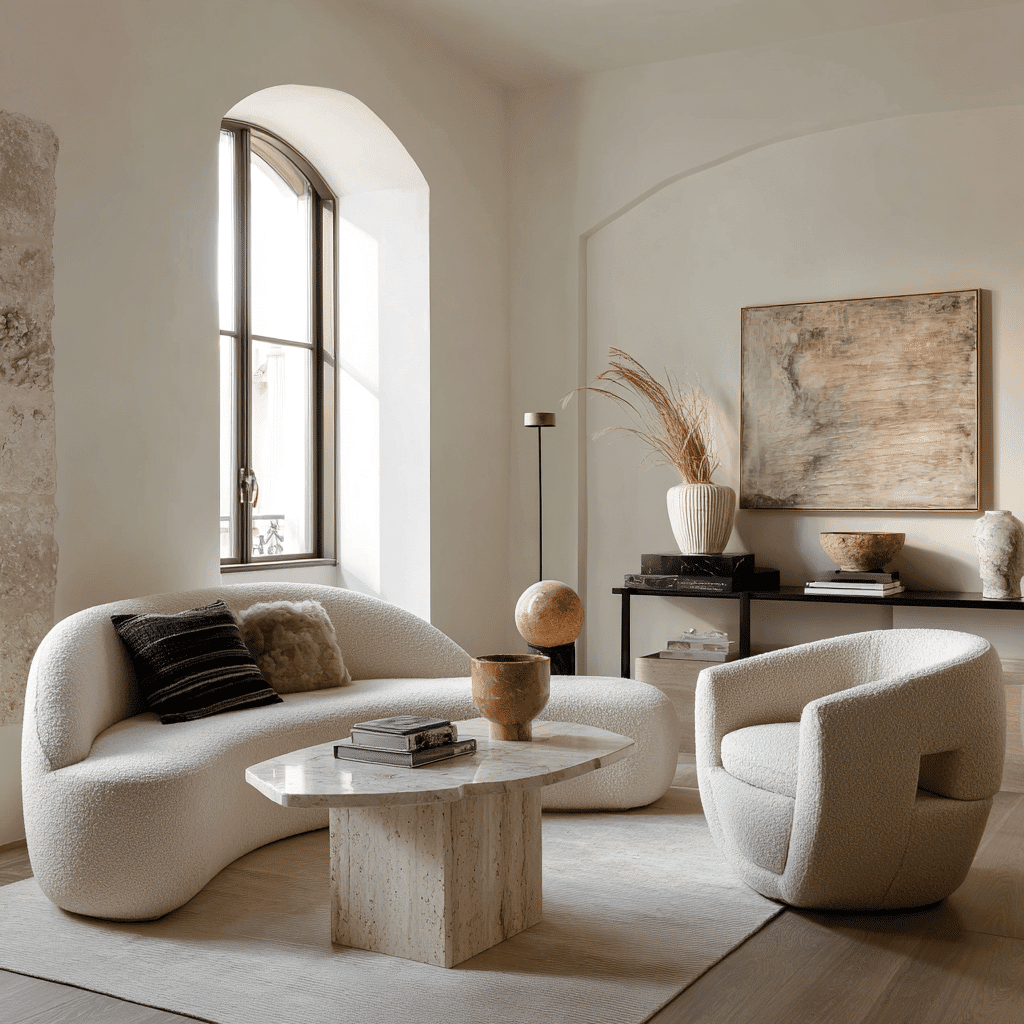
A curved ivory sofa paired with a pedestal travertine coffee table reads more like an installation than seating. Add an armchair with an architectural silhouette, then keep accessories minimal — a single ceramic sculpture or stone orb is enough.
Dining Room: Artistic Anchors
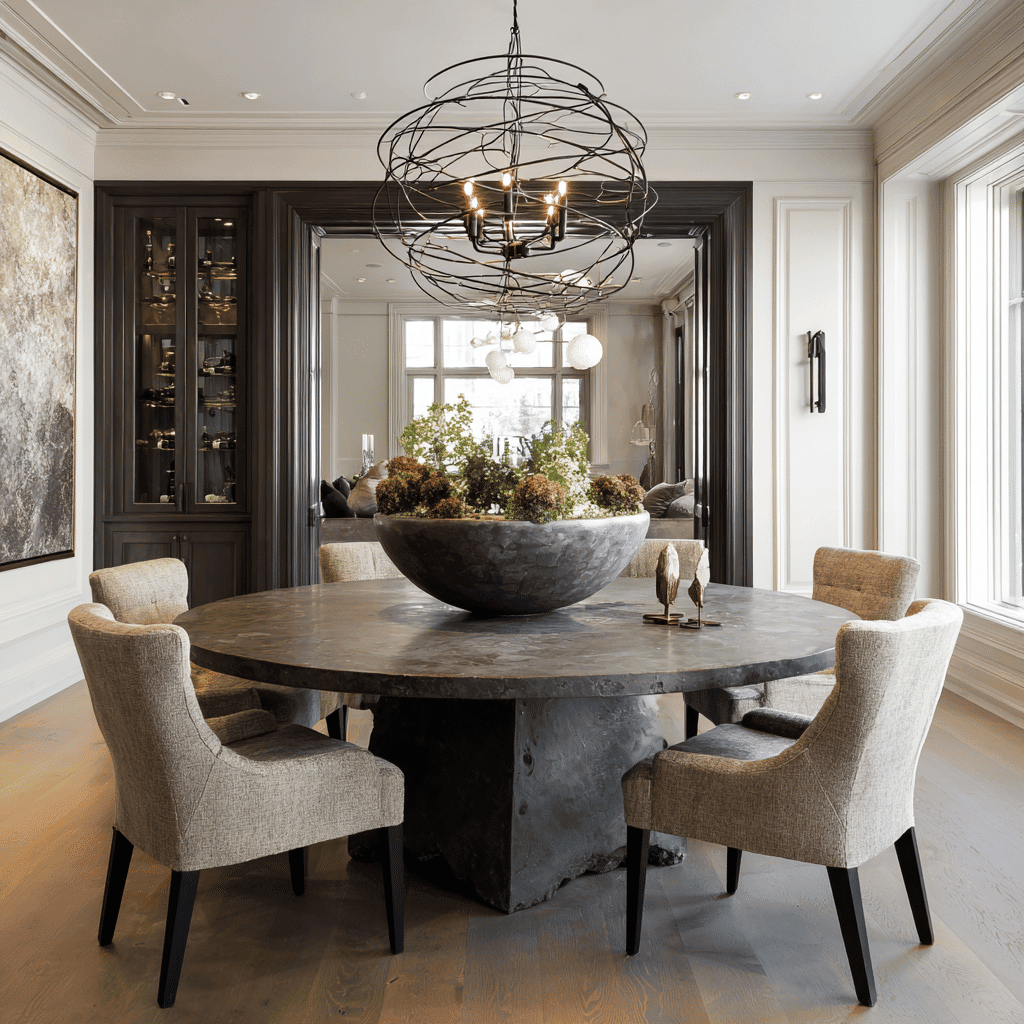
A round pedestal dining table in dark wood or travertine, topped with an oversized metal bowl or hand-carved stone sculpture, sets a gallery-like tone. A chandelier with organic curves overhead and upholstered chairs in a neutral fabric complete the look.
Entryway: First Impressions
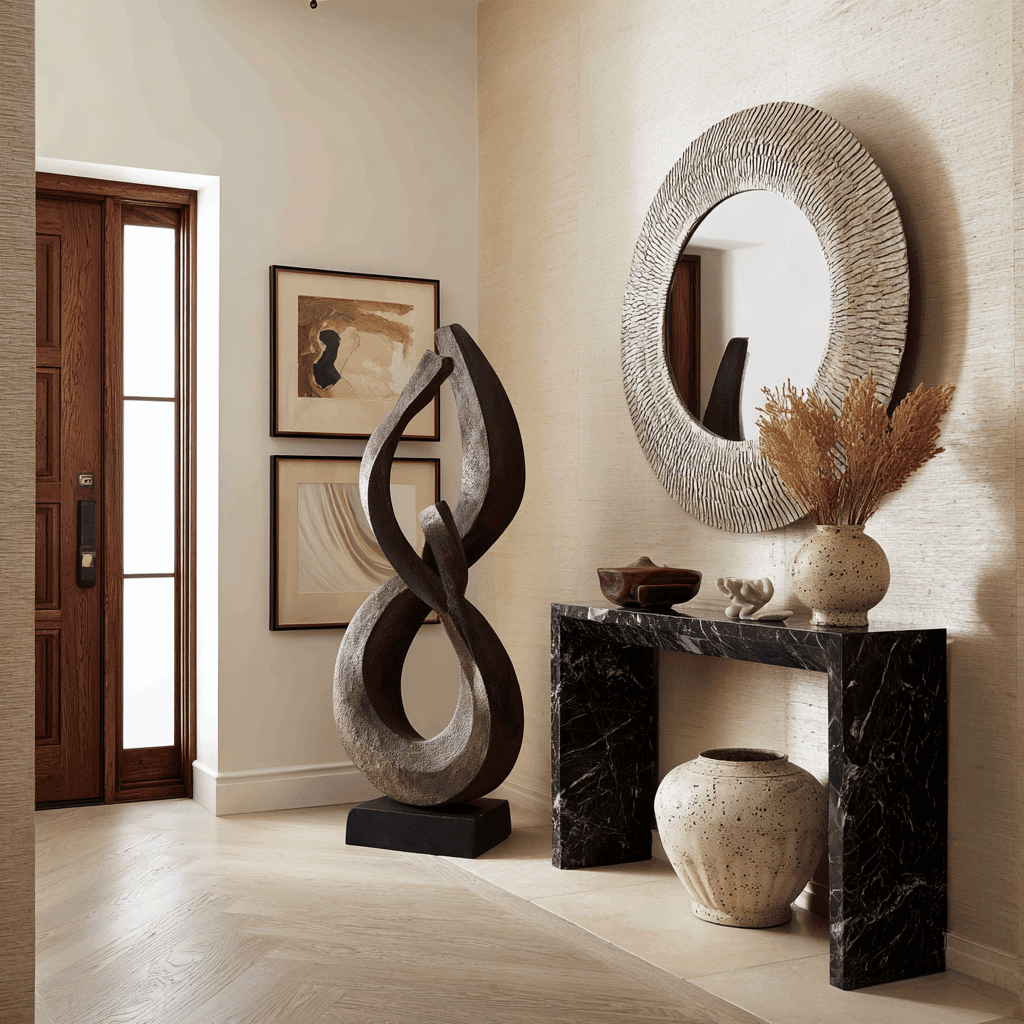
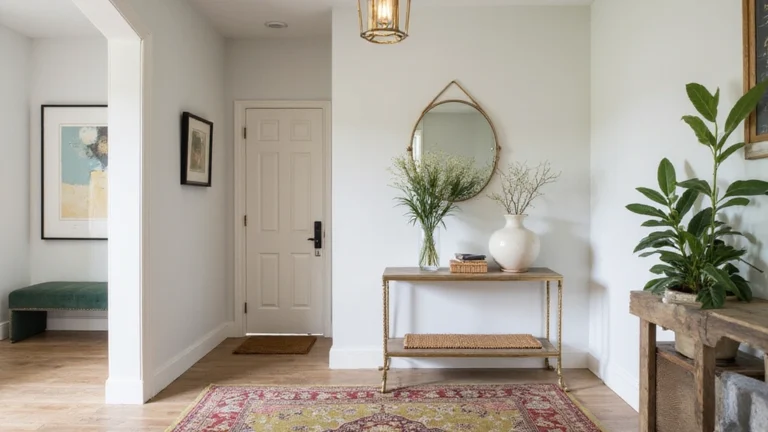
A sleek console styled with a tall abstract metal sculpture and a low ceramic piece for contrast, topped with a round sculptural mirror, makes an entryway unforgettable. A single floor-standing sculpture in stone or wood can serve as the showstopper — keep everything else minimal.
Trend #6: Modern Abstract Rugs
Why Rugs Are the Centerpiece in 2026 Homes
Rugs have stepped out of the background this year. Bold color palettes and organic, painterly patterns give modern abstract rugs the presence of an art installation rather than a floor covering — and designers are using them to define the mood of an entire room.
Choosing the Right Rug for Your Space
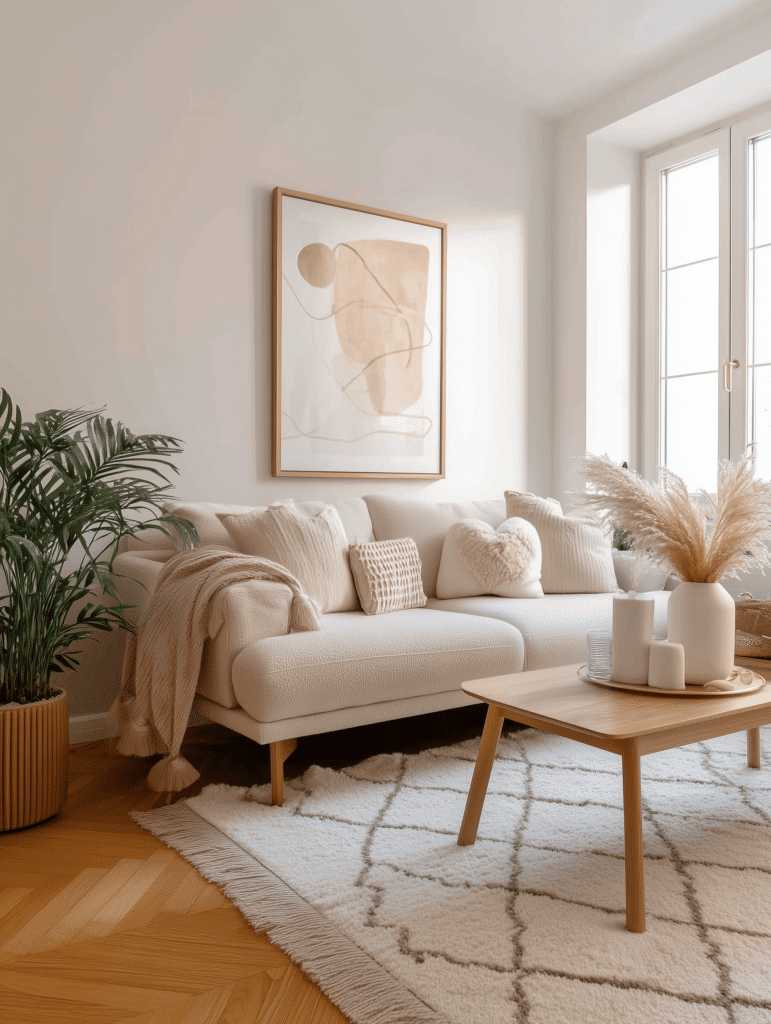
Go oversized for maximum impact, or layer two or three rugs with complementary patterns for depth. Treat the rug as your foundation — the element that sets the tone for everything else in the room.
Living Room: Artistic Anchor
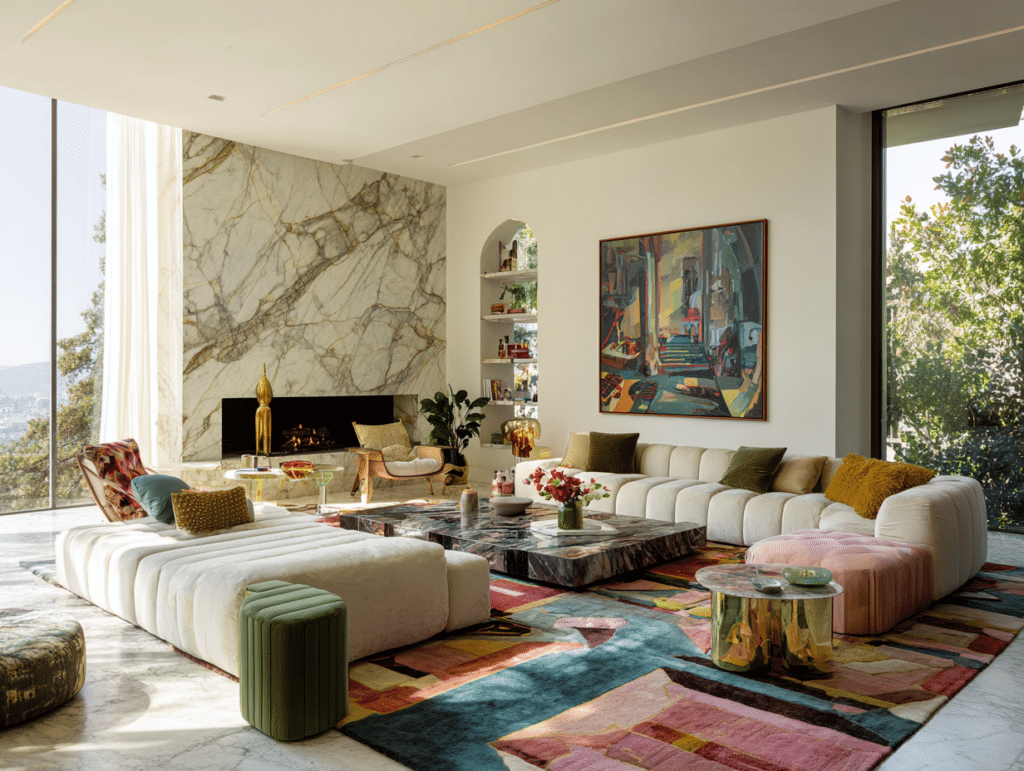
An abstract rug with sweeping brushstroke patterns in muted blues and warm neutrals grounds a living room while adding movement. Keep the surrounding furniture understated — a simple cream sectional and a sculptural coffee table — so the rug remains the star.
Bedroom: Soft Statement
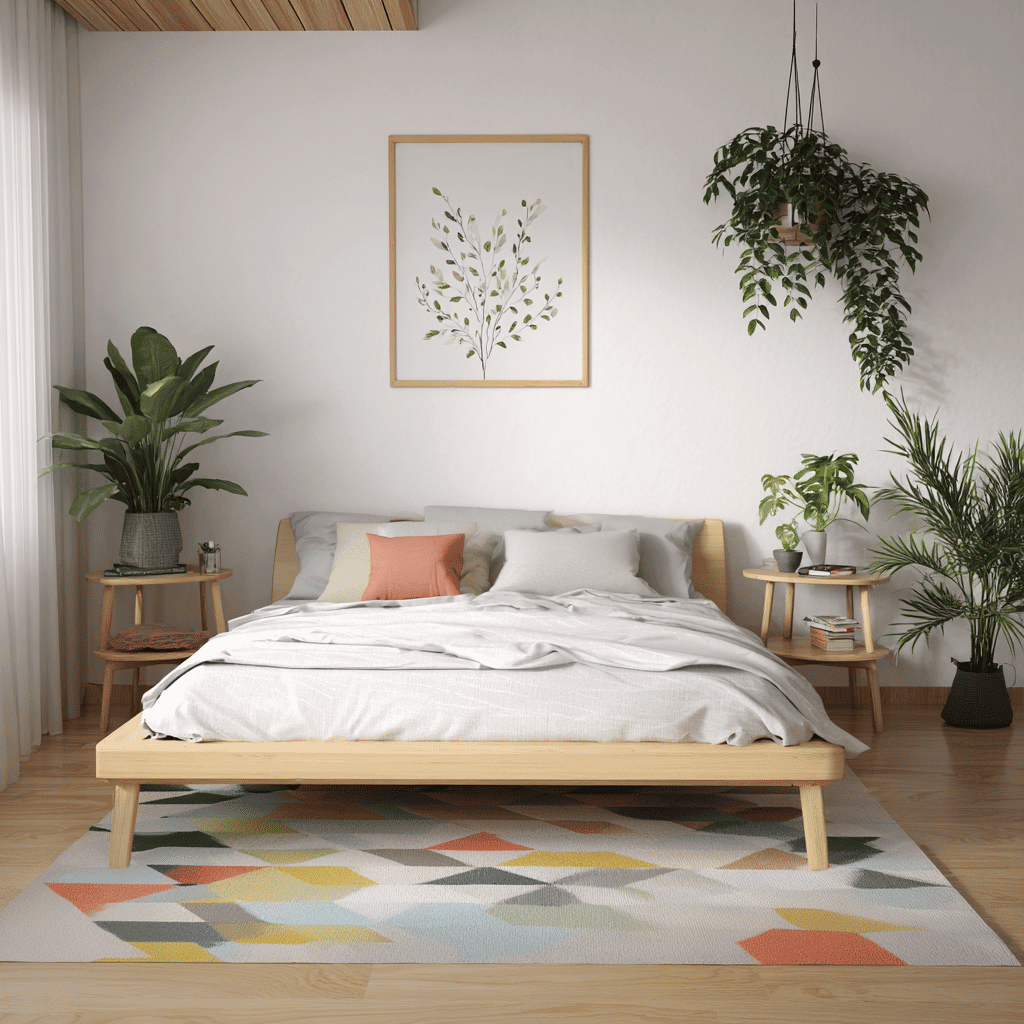
A large watercolor-inspired abstract rug in calming grays and blush tones softens hardwood floors and adds quiet sophistication. Pair with crisp white bedding, linen curtains, and a plush bench at the foot of the bed.
Dining Room: Bold Drama
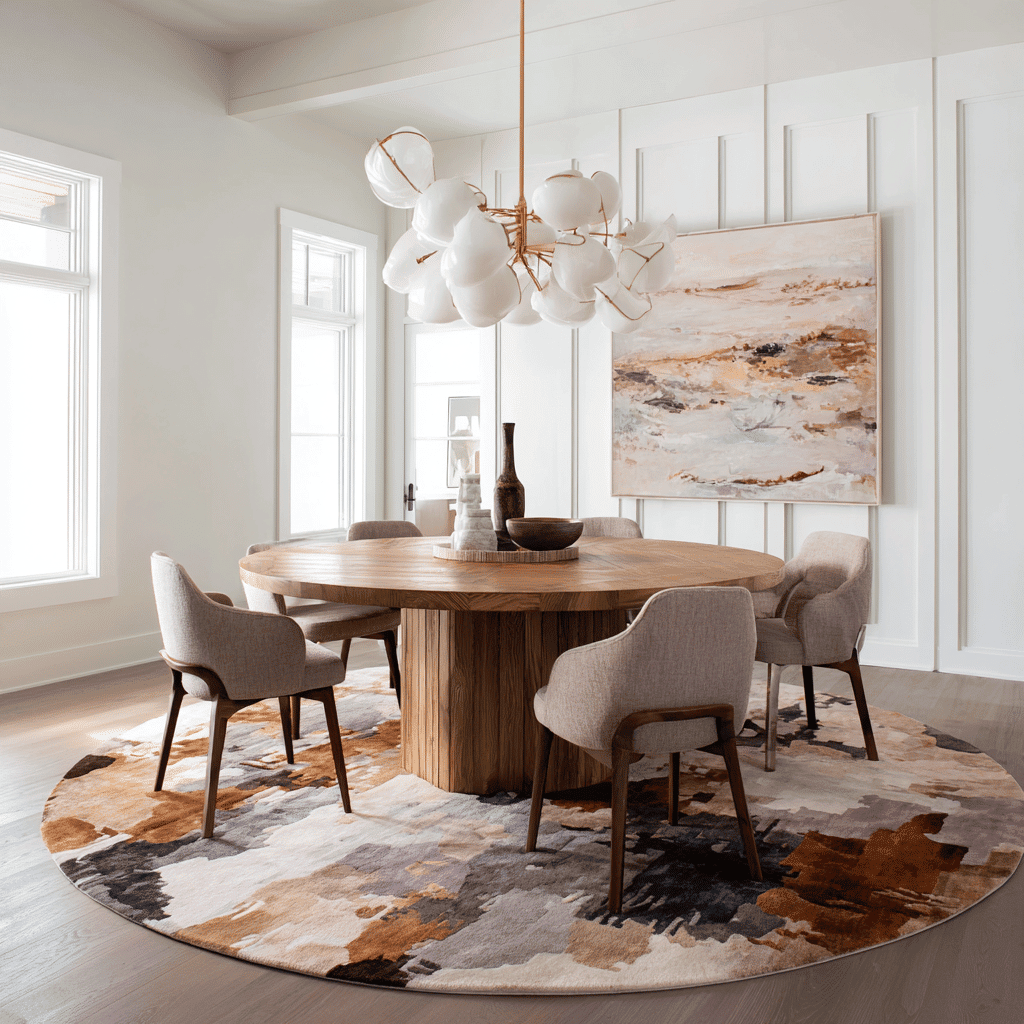
A geometric rug in earthy rust and deep charcoal tones anchors a round wood pedestal dining table and defines the space, even within an open-concept layout. Add upholstered dining chairs and a sculptural chandelier for a warm, artistic finish.
Earthy Color Palettes: Grounding Your Space
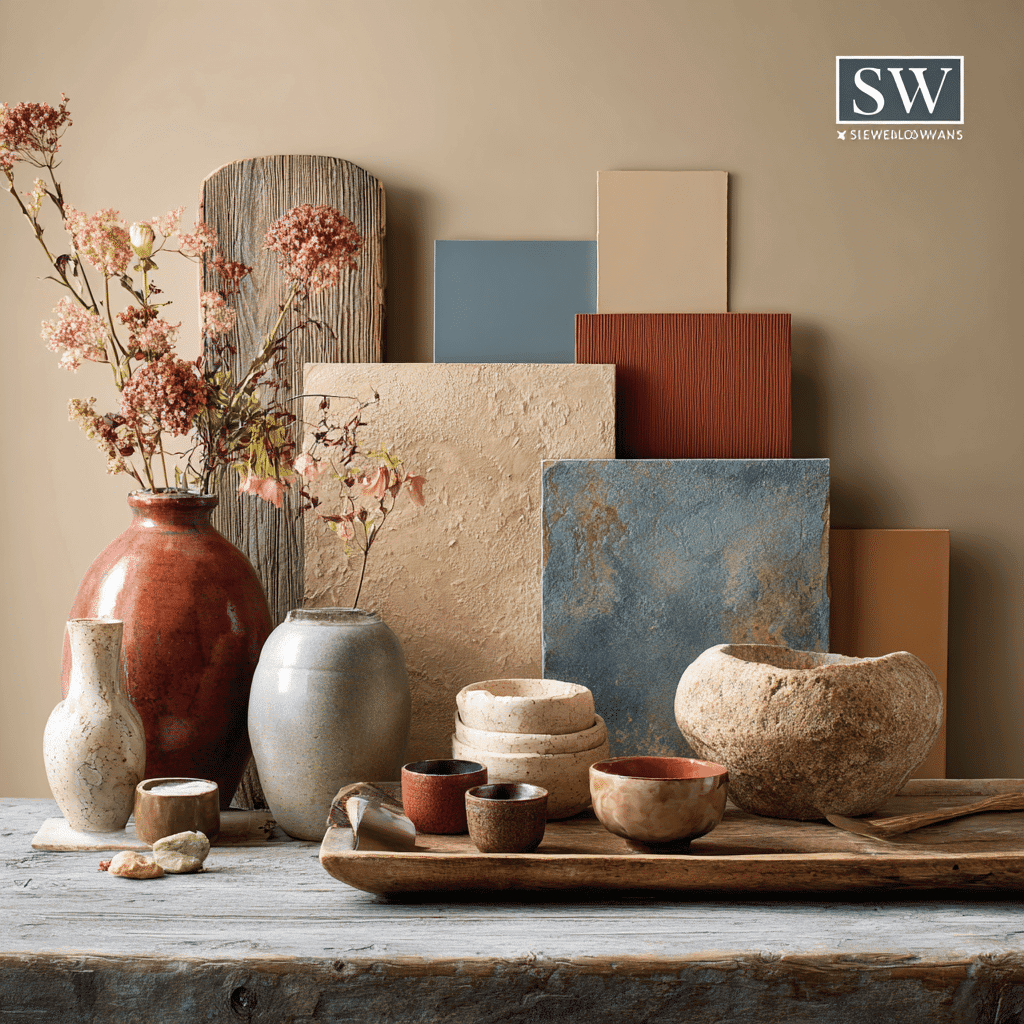
If color could hug you, 2026’s palette would do exactly that. Think terracotta, ochre, olive, deep clay, and muted rose or plum — warm, nature-derived hues that create depth and calm rather than the stark whites and cool grays of recent years.
Top Colors to Watch in 2026
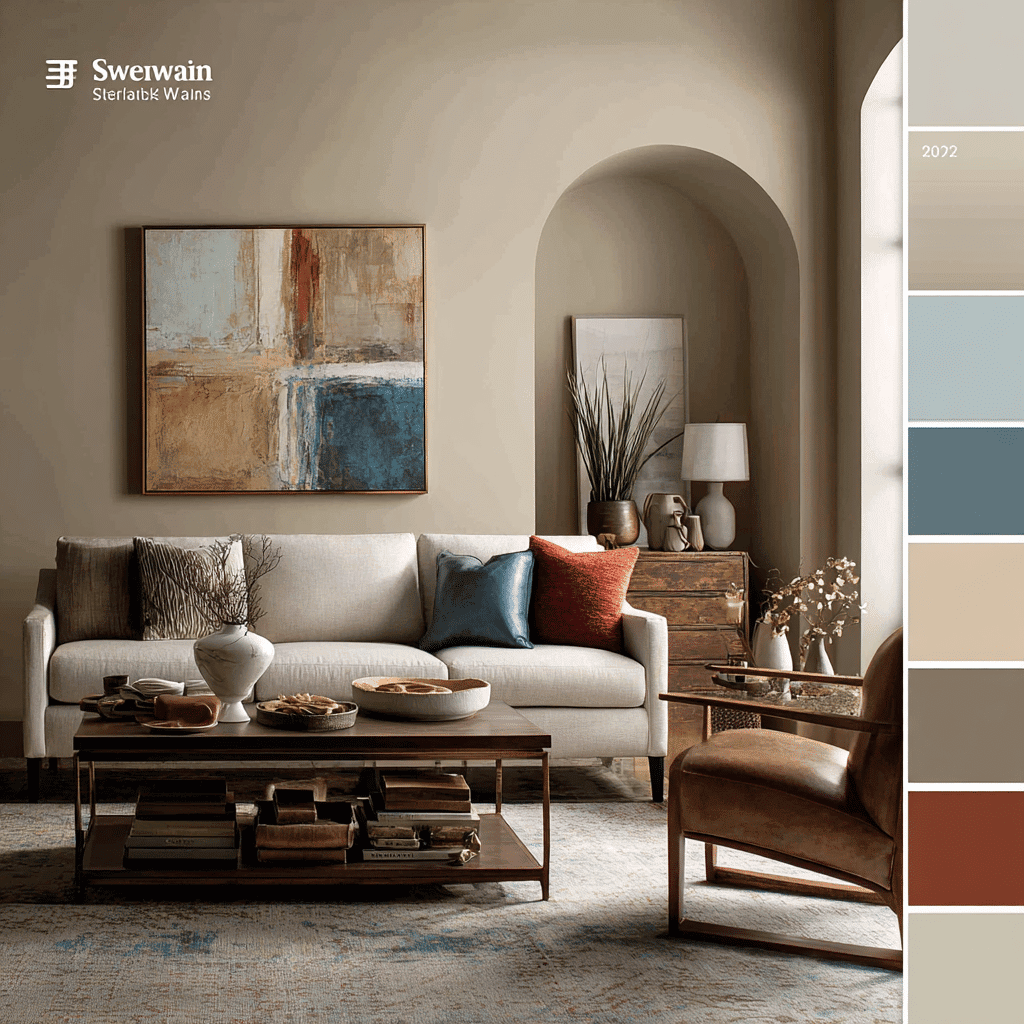
- Universal Khaki (SW 6150): Sherwin-Williams’ 2026 Color of the Year — a warm, earth-toned neutral that layers easily with richer colors and textures.
- Smoky Blue-Green (“Hidden Gem”): Behr’s 2026 pick, a moody, restorative blend of blue and green that sits between neutral and statement color.
- Warm Earthy Neutrals & Clay Tones: Terracotta, ochre, caramel, and warm sand, ideal alongside wood, stone, or linen.
- Deep Accents — Cordovan, Plum, Reddened Earth: Rich accent tones for statement furniture, accent walls, or accessories.
- Soft Pastel Tints With Dusty Undertones: Dusty lilac, faded green, and soft blue accents that add airiness without overpowering the warmth.
How to Incorporate Earthy Tones
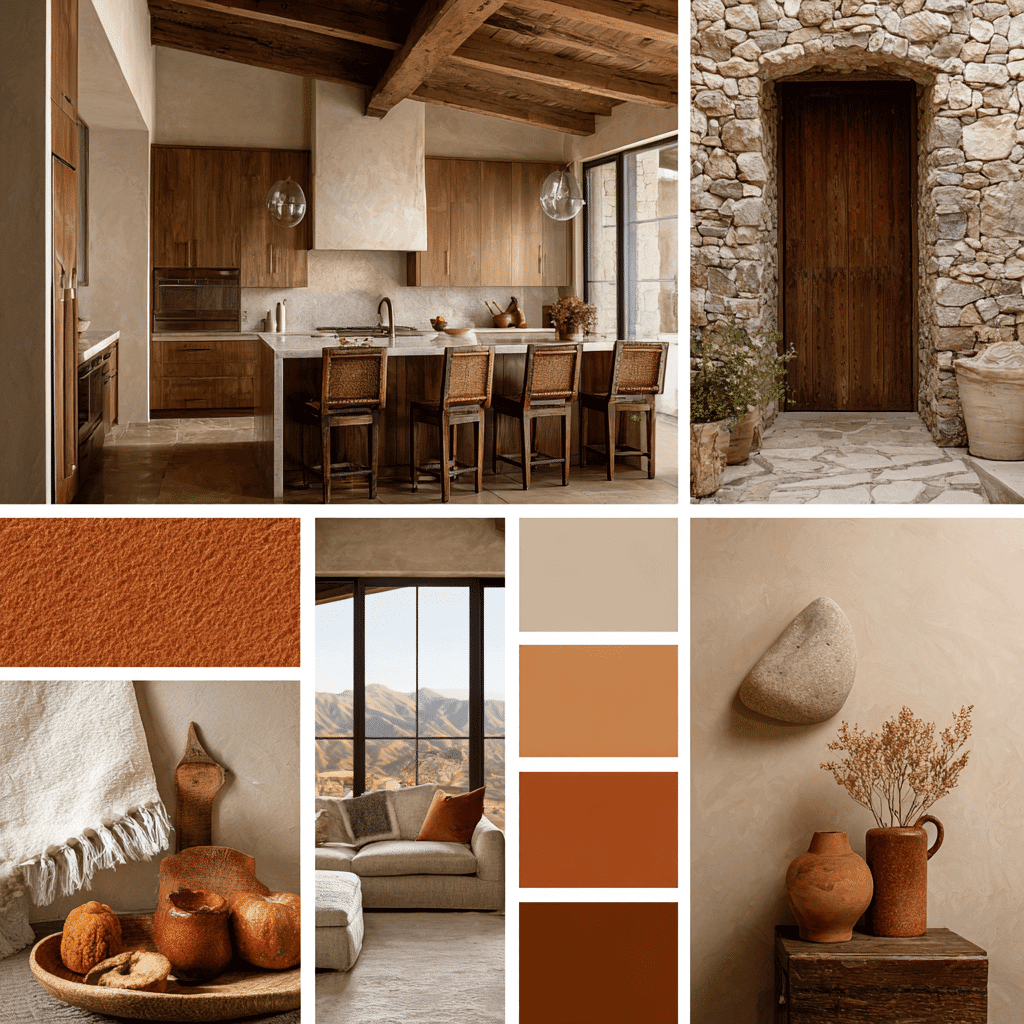
Ease in with a single clay-toned accent wall or a few olive-green throw pillows. For a bolder approach, try a fully color-drenched room — walls, ceiling, and trim in layered shades of the same earthy family. Pair with natural wood, like a terracotta rug under a walnut dining table, for a grounded, welcoming result. Thrift stores and flea markets are a budget-friendly way to find vintage pieces in these hues, adding lived-in character along the way.
Comforting Chaos: Maximalism With a Twist
Maximalism Gets Comfy in 2026
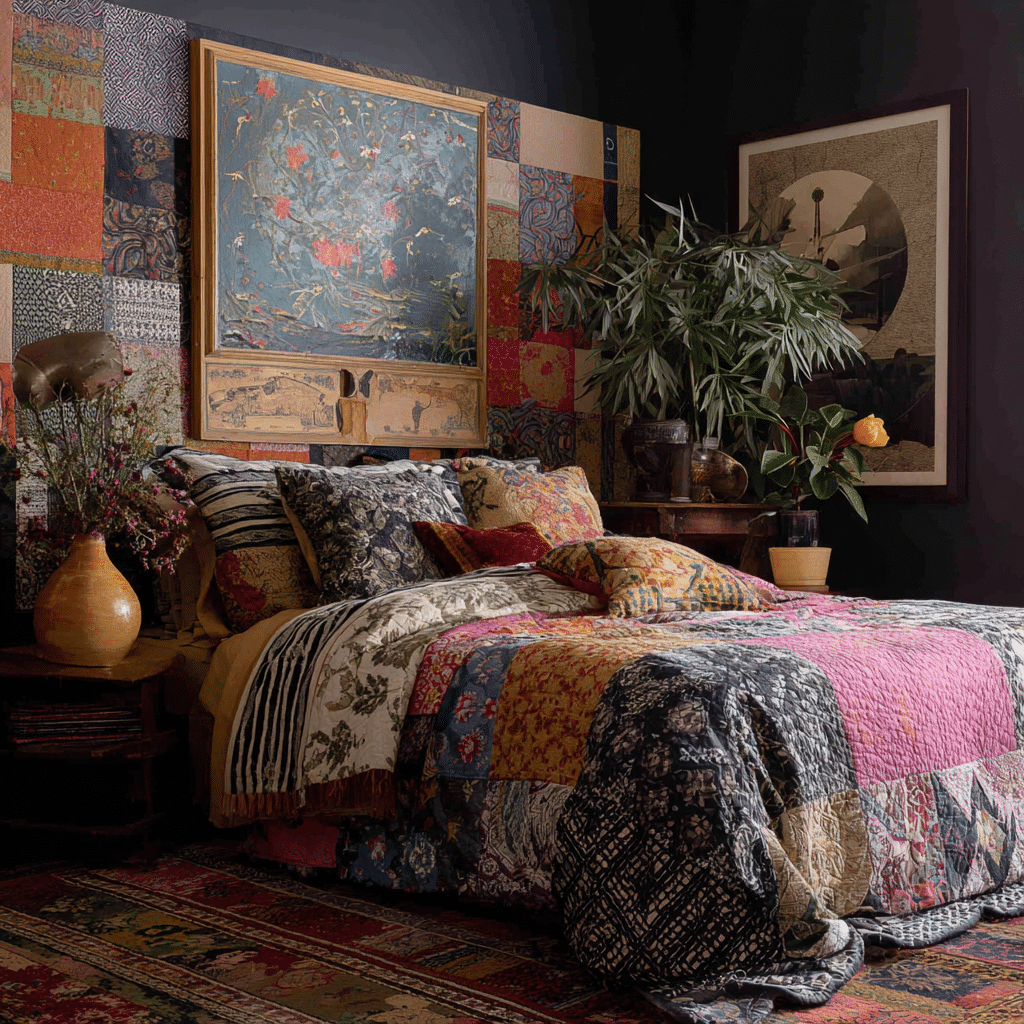
2026’s take on maximalism is best described as “comforting chaos” — clashing patterns, bold artwork, and layered texture that come together like a well-loved quilt. It’s eclectic but intentional, letting personality lead rather than piling on for the sake of it. Curved armchairs, sculptural lighting, and a mix of florals with geometrics are all fair game.
Mixing Patterns and Personal Touches
Start with one bold anchor piece — a vibrant rug is a good place to begin — and build outward. Layer cushions in different prints, bring in freehand artwork, or hunt down vintage finds with a story. Balance bold patterns against neutral backdrops so the room reads curated rather than cluttered.
Budget-Friendly Hacks
Big personality doesn’t require a big budget. Thrifted patterned wallpaper scraps, DIY embroidered accents, or simply rotating cushion covers seasonally can refresh a space affordably — much like remixing a wardrobe.
Rustic Modern: Cozy Meets Contemporary
Rustic modern is one of the most livable directions for 2026, blending comfort with polish. A reclaimed wood dining table paired with sleek matte metal legs captures the idea perfectly — warm and grounded, yet still streamlined. Woven throws and linen curtains soften the look, while minimalist lighting keeps it current. The balance is the point: a welcoming, lived-in feel without losing crisp, contemporary edges.
Earthy tones such as terracotta, olive, and plum lead the palette this year, offering warmth and versatility across walls, furniture, and accents.
Start with affordable indoor plants, thrifted natural-fiber rugs, or a DIY pebble tray to bring nature indoors without a big spend.
Yes. Use layered textures and patterns strategically — focus on one bold wall or rug to add personality without visually cluttering a small room.
It’s centered on plush, oversized pieces built for comfort, often with ergonomic designs that prioritize relaxation and support.
It integrates quietly — hidden sensors for lighting or air quality — enhancing wellness and comfort without disrupting the room’s aesthetic.