
Do Quartz Countertops Stain: A How-to Care Guide
Quartz countertops have become one of the most talked-about choices in kitchen design, and it’s easy to see why. Few things set the tone in a kitchen quite like a gleaming, well-maintained quartz surface, and its popularity keeps climbing thanks to a winning combination of beauty, durability, and easy upkeep. But with any investment this significant, the question of proper care naturally follows: do quartz countertops actually stain, how should they be cleaned, and what does it take to keep one looking its best for years to come?
This guide walks through all of it.

Can Quartz Countertops Stain?
The short answer is yes, quartz countertops can stain, though the full picture is a little more nuanced than that. Quartz is a genuinely stain-resistant material, but resistant isn’t the same as stain-proof. In practice, that means quartz holds up beautifully against the vast majority of everyday spills, while still being capable of staining under the wrong conditions.
The rest of this guide covers exactly what those conditions are, and how to avoid them, so you can keep a quartz countertop looking flawless for the long haul.
Understanding Quartz Countertops
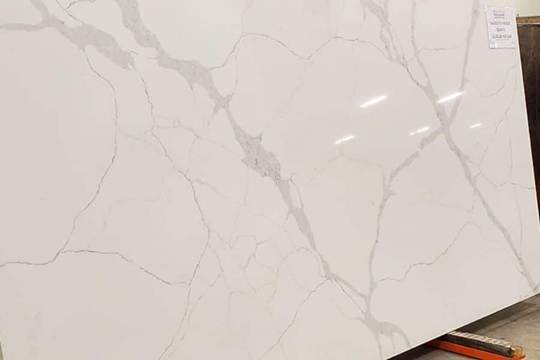
Quartz countertops are an engineered material, made by combining roughly 90 percent ground natural quartz with about 10 percent polymer resins. That combination produces a surface that’s exceptionally hard, more durable than granite in many respects, and completely non-porous, meaning there are no tiny holes for spills to seep into and cause staining.
The natural quartz is what gives the material its hardness and lack of porosity, while the polymer resins add flexibility and help prevent cracking or chipping. Together, the two components create a surface that’s as tough as it is good-looking.
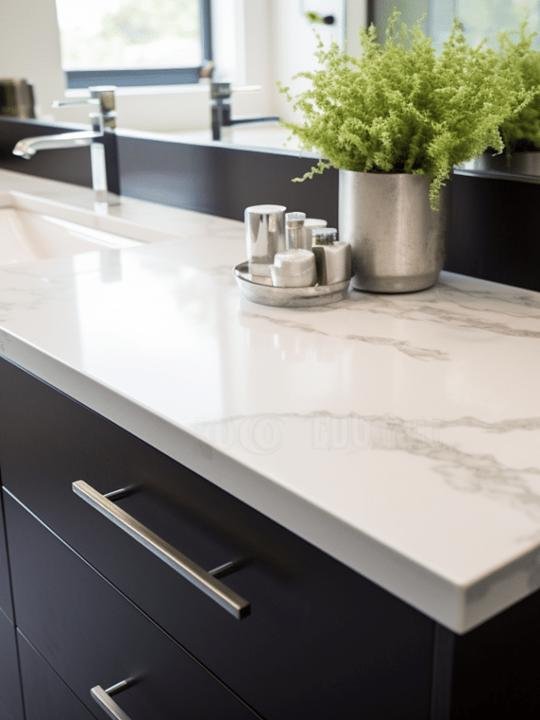
That visual appeal is a big part of quartz’s draw. It’s available in an extensive range of colors, from pure white to jet black and everything in between, and thanks to the manufacturing process, many quartz slabs are engineered to mimic the look of marble, granite, or even polished concrete.
Whether the goal is a sleek modern kitchen or a warmer, rustic feel, there’s a quartz option to match. The one caveat worth keeping in mind is heat: quartz is heat resistant, but not heatproof, so hot pans should never go directly onto the surface. A trivet or hot pad is essential, since sustained high heat can leave a permanent burn mark.
Why Quartz Countertops Are Stain Resistant
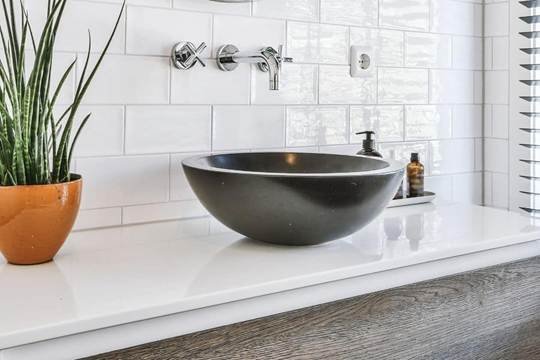
Quartz’s stain resistance comes down entirely to its non-porous surface. A porous material, like unsealed natural stone, is full of microscopic holes, so a spilled glass of red wine at a dinner party can seep in and leave a stain that’s difficult to remove. A non-porous surface has no such holes, so the liquid simply sits on top, waiting to be wiped away.
That’s the core mechanical reason quartz performs so well against everyday spills. Natural stone materials like granite and marble, by comparison, are naturally porous and rely on sealant for their stain resistance. That sealant can be reapplied, but it also wears down over time, gradually leaving the stone vulnerable to staining again in a way that quartz, with its inherent non-porosity, simply isn’t.
Why Quartz Countertops Can Stain
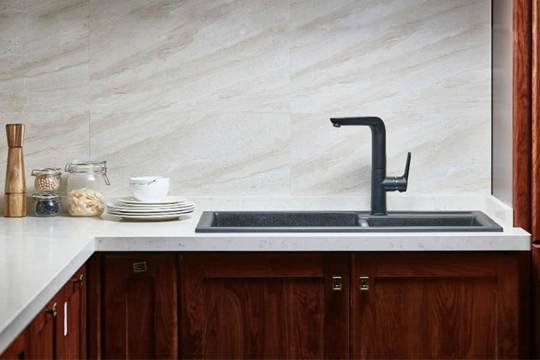
Even with all that built-in resistance, quartz can still stain under the right circumstances, and prolonged exposure is almost always the reason why. Substances like wine, coffee, tea, and cooking oil won’t cause immediate damage, but if they’re left sitting on the surface for an extended period, they can eventually leave a mark, especially on lighter or white countertops.
The takeaway is simple: quartz handles brief contact with everyday spills exceptionally well, but the key to keeping it stain-free is wiping up spills promptly rather than letting them linger.
How to Prevent Stains on Quartz Countertops
Quartz countertops are tough and stain-resistant, but a little routine care goes a long way toward keeping them that way, and prevention is always easier than dealing with a stubborn mark after the fact. Avoiding direct contact between the countertop and known staining substances is the simplest place to start — a cutting board should always be used when chopping juicy tomatoes or zesting lemons, since acidic ingredients like lemon juice and tomato sauce shouldn’t be left sitting directly on the surface for long.
If a spill does happen, the fix is straightforward: wipe it up right away before it has a chance to dry and settle in.

A handful of common household items are worth keeping an eye on specifically: wine, coffee, tea, oil, and acidic foods like citrus or tomato-based sauces. None of these will stain quartz on contact, but each has the potential to leave a mark if left sitting on the surface for an extended stretch of time, which is exactly why prompt cleanup matters more than any special product.
How to Clean and Maintain Quartz Countertops
For everyday cleaning, warm water and a mild soap or detergent are really all that’s needed. Combine the two in a bowl, soak a soft cloth or non-abrasive sponge in the solution, and wring out the excess water before wiping down the countertop using a circular motion. It’s worth avoiding heavy scrubbing or excess pressure, since both can damage the surface over time. Once the countertop is clean, rinse the cloth with fresh water, wipe again to remove any soap residue, and finish by drying the surface with a microfiber cloth to prevent water spots from forming.
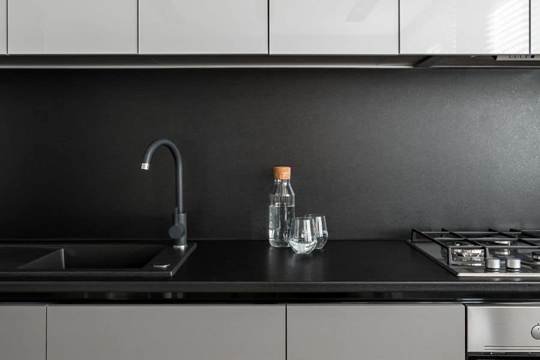
A few specific products and tools make quartz maintenance even easier. A quartz-specific cleaner is formulated to clean the surface without causing damage, and it’s worth following the manufacturer’s instructions closely when using one. A good glass cleaner can also help remove streaks and add a bit of extra shine, simply sprayed on and wiped off with a microfiber cloth, which is itself one of the best tools for the job thanks to its soft, scratch-free texture and strong absorbency.
On the flip side, harsh cleaners like bleach or ammonia should be avoided entirely, since they can dull the surface over time, and the same goes for vinegar, lemon juice, and baking soda used as everyday cleaners. A soft cloth or non-abrasive sponge should be the default for every cleaning session.
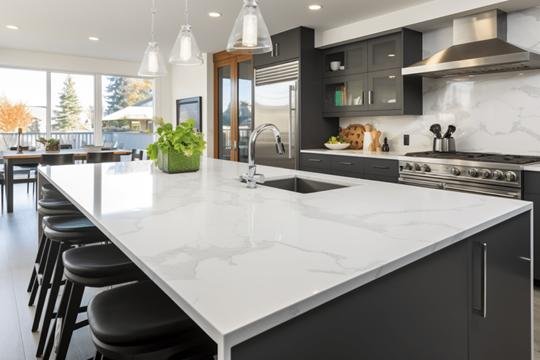
Different types of stains call for slightly different approaches. Hard water stains, which are especially common in areas with high mineral content in the water supply, respond best to a quartz cleaner specifically labeled for removing hard water buildup. For more stubborn marks, a paste made from baking soda and water is a reliable fix — apply it to the stain, let it sit for a few minutes, and gently wipe it away with a dry cloth. This simple approach is often enough to lighten or fully remove even a persistent stain.
Best Practices for Keeping Quartz Countertops Stain-Free
Keeping a quartz countertop in pristine condition really comes down to a handful of consistent habits. Always dry the surface thoroughly after cleaning with a clean microfiber cloth, both to prevent water spots and to make sure no cleaning residue is left behind. If the countertop picks up a mark, such as ink or a similar residue, a soft cloth with a small amount of rubbing alcohol usually lifts it, followed by a thorough rinse with warm water and a full dry. Spills should always be addressed as quickly as possible with a cloth dampened in warm water and mild soap, wiping gently rather than scrubbing, since aggressive rubbing can spread a spill or work it deeper into the surface.

For persistent hard water marks, a specially formulated hard water stain remover is worth keeping on hand, particularly in households where the water supply has a high mineral content. A cutting board should be a permanent fixture during food prep, both to prevent scratches and to keep acidic or pigmented ingredients from ever touching the countertop directly, and any spill — wine, oil, or juice alike — should be cleaned up the moment it happens rather than left to sit. Finally, trivets or hot pads under hot cookware are non-negotiable for protecting the surface from heat damage. Building these habits into a regular routine is really all it takes to keep a quartz countertop looking its best for years to come.
Frequently Asked Questions
Yes. While quartz countertops are highly durable, they can still be damaged by high heat, severe impact, harsh chemicals, and abrasive cleaning materials.
All quartz countertops are inherently resistant to staining thanks to their non-porous surface. That said, certain factors can influence how resistant a given slab is in practice, including the specific type and color of the quartz and the nature of the staining substance involved.
No. Unlike natural stone surfaces, quartz countertops don’t require sealing. They’re naturally non-porous and resist staining well without any additional treatment.
It’s best to avoid bleach on quartz countertops, since it can break down the bond between the quartz and the resins, leading to discoloration and long-term damage.
A mild dish soap mixed with water, or a quartz-specific cleaner, are typically the best options for everyday cleaning.
Quartz is heat resistant, but not heatproof. Constant exposure to high temperatures can lead to cracking or discoloration over time, so it’s best to always use trivets or heat pads under hot cookware.